
Fasting and Mental Health: Can Intermittent Fasting Help Your Brain, Mood, and Focus?
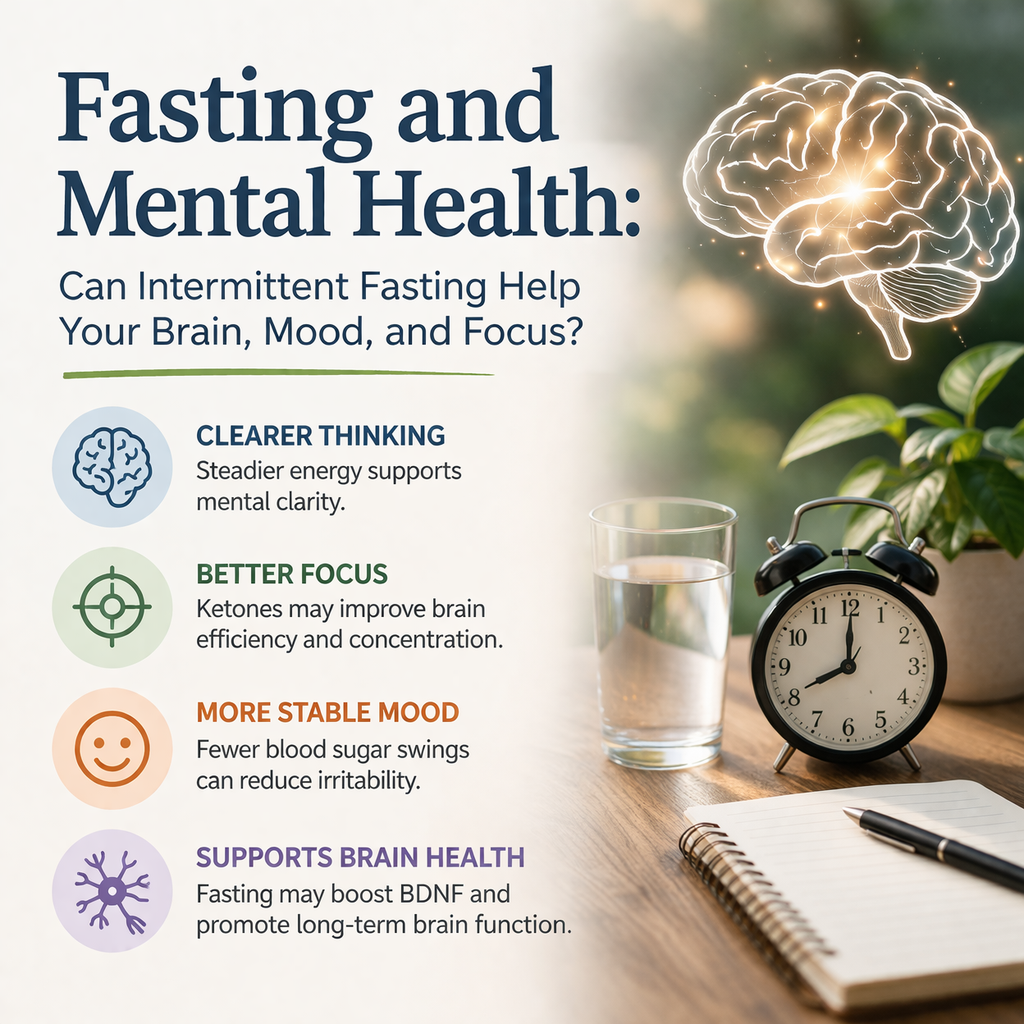
Intermittent Fasting and Mental Health
When most people hear about intermittent fasting, they think about weight loss.
That is one big reason many people try it.
But for some people, weight loss is not the only benefit they notice.
Many people say they feel better mentally too.
They describe clearer thinking, better focus, less brain fog, and a more steady mood. That is why more people are asking about fasting and mental health and whether meal timing can affect the brain as much as it affects the body.
The answer is that it can.
That does not mean fasting is a cure for depression, anxiety, or other mental health conditions. It is not. But there are real reasons why fasting for mental health has become such an interesting topic.
Your brain depends on steady energy, healthy sleep, balanced blood sugar, and a well-functioning metabolism. Intermittent fasting may help support all of those areas.
Why Fasting and Mental Health Are Connected
Your brain is always working. Even while you sleep, your brain is active. It helps control your thoughts, memory, focus, mood, and decision-making.
To do all of that well, your brain needs fuel.
Most of the time, your body uses glucose for energy. Glucose comes from the food you eat, especially carbohydrates. But when you go for a period of time without eating, your body begins to make ketones from stored fat.
Ketones can be used by the brain as fuel.
For some people, this matters because ketones may provide a steadier form of energy than frequent ups and downs in blood sugar. When energy is more stable, the mind may feel more stable too.
That is one reason the conversation around fasting and mental health has grown. The brain does not just care about how much you eat. It also cares about when you eat.
Blood Sugar Swings Can Affect Mood and Focus
A lot of people feel mentally drained because their blood sugar is swinging up and down all day.
This is especially common when meals and snacks are frequent and heavy in sugary or processed foods.
Here is what can happen:
You eat.
Blood sugar rises.
Insulin rises to help move sugar into your cells.
Then blood sugar drops.
If this keeps happening through the day, you may notice:
Fatigue
Irritability
Brain fog
Trouble concentrating
Cravings
Energy crashes
This is where fasting for mental health may help.
With fewer eating episodes, some people have fewer blood sugar swings. That may lead to steadier energy, better concentration, and fewer emotional ups and downs.
It is not just about eating less. It is about giving your body a more stable rhythm.
Why Some People Feel More Clear When They Fast
One of the most common things people say when they start fasting is, “I feel more clear.”
They may feel sharper in the morning. They may have better focus at work. They may notice less mental fog after cutting back on constant snacking.
There are a few possible reasons for this.
First, ketones may help fuel the brain in an efficient way.
Second, fasting may improve how the body handles insulin and energy over time.
Third, eating less often may reduce the cycle of highs and lows that can leave people feeling sluggish.
When your body is not constantly moving from one snack to the next, some people notice their mind feels calmer and more steady.
That does not happen for every person right away, but it is one reason fasting and mental health are often discussed together.
Fasting May Support Brain Function
Researchers have also looked at how fasting may affect the brain itself.
Fasting may support a protein called brain-derived neurotrophic factor, or BDNF.
BDNF helps support learning, memory, and brain flexibility. In simple terms, it helps the brain stay healthy and adapt over time.
This is one reason fasting gets attention not just for weight control, but for cognitive health too.
When people talk about fasting for mental health, they are often talking about more than mood alone. They are also interested in focus, memory, mental sharpness, and long-term brain health.
Fasting Is a Mild Stress That Can Build Resilience
At first, fasting sounds like something that would make stress worse.
In some cases, especially when fasting is extreme or poorly timed, it can.
But in a healthy and controlled form, fasting acts as a mild stressor. This type of stress may help the body adapt and become more resilient.
This is similar to exercise.
Exercise is a stress on the body, but in the right amount, it makes you stronger.
Fasting may work the same way. It can train the body to become more flexible with energy use and more efficient under mild stress.
That does not mean longer fasting is always better. In fact, too much fasting can backfire. But a simple, steady approach may help the body and brain adapt in healthy ways.
Can Fasting Help Anxiety?
Many people ask whether fasting helps anxiety.
The honest answer is that it depends on the person.
For some people, steadier blood sugar, fewer energy crashes, and better eating habits may help them feel calmer and more emotionally steady. In that sense, fasting may support overall well-being.
This is why some people search for answers about whether fasting helps anxiety or whether better meal timing might help them feel less overwhelmed.
But it is important to be careful here.
Fasting is not a treatment for anxiety disorders. It should not replace therapy, counseling, medication, or medical care when those are needed.
Also, in the beginning, some people feel more anxious when they start fasting. They may feel shaky, irritable, restless, or uncomfortable. This often happens during the adjustment period, especially if they are used to eating often or if they are drinking caffeine on an empty stomach.
So when people ask if fasting helps anxiety, the best answer is this:
It may help some people feel more stable over time, but it can also make some people feel worse if they start too aggressively or if fasting is not a good fit for them.
Why Fasting Can Feel Hard at First
The first few days or weeks of fasting can be an adjustment.
Some people notice:
Irritability
Headaches
Trouble focusing
Hunger
Low energy
Anxiety
That does not always mean fasting is bad for them. Sometimes it just means the body is adjusting to a new routine.
Still, it is a mistake to push through severe symptoms and assume that harder is better.
If fasting is making you feel miserable, shorten the fasting window and look at the basics:
Are you sleeping enough?
Are you drinking enough water?
Are you eating enough protein and fiber at meals?
Are you trying to do too much too soon?
A gentler approach is often better, especially when the goal is fasting for mental health rather than extreme weight loss.
Fasting, Sleep, and Mental Health
Sleep has a major effect on mood, focus, and stress.
That means any discussion about fasting and mental health should also include sleep.
Some people find that fasting helps them sleep better, especially if they stop eating late at night. A more regular eating pattern may help support a more regular sleep routine.
Others may have trouble sleeping at first, especially if they go to bed hungry or if their body is still adjusting.
A few helpful habits include:
Avoid large meals late at night
Keep a regular sleep and eating schedule
Give your body time to adapt
Avoid pushing your fasting window too far if sleep gets worse
If fasting improves your sleep, you may also notice better focus and mood during the day. If it hurts your sleep, it may hurt your mental state too.
Long-Term Brain Health Matters Too
One of the most interesting parts of the research on fasting and mental health is the possible role fasting may play in healthy brain aging.
Fasting may help support:
Better metabolic health
Lower inflammation
Cellular repair
Improved stress response
These areas matter because chronic inflammation and poor metabolic health are linked with cognitive decline over time.
That does not mean fasting prevents dementia or guarantees lifelong brain health. But it does suggest that eating patterns may play a role in how the brain ages.
For people thinking about fasting for mental health, that bigger picture can be very motivating. The goal is not just feeling better today. It may also be supporting brain health for the future.
You Do Not Need Extreme Fasting
This is one of the most important things to understand.
You do not need extreme fasting to see benefits.
You may notice improvement just by:
Cutting out late-night snacking
Keeping a more consistent eating window
Letting your body rest between dinner and breakfast
Avoiding constant grazing all day
Small changes can still make a real difference.
When it comes to fasting and mental health, consistency often matters more than intensity.
When Fasting May Not Be Helping
Fasting should support your well-being, not make life harder.
If fasting is too aggressive, you may notice:
Worse mood
Trouble concentrating
More irritability
Poor sleep
Fatigue
Feeling overly stressed
If that happens, step back.
A shorter fasting window may work better. Better meal quality may help. More sleep may help. Some people also find that fasting simply is not the right tool for them at a certain stage of life or health.
That is okay.
The goal is not to force fasting. The goal is to find a pattern that helps your body and mind function well.
The Bigger Picture
Your mental health is not separate from your physical health.
When blood sugar is more stable, sleep is better, energy is steadier, and inflammation is lower, the brain often benefits too.
That is why fasting and mental health are so closely linked.
For some people, fasting for mental health may lead to better focus, less brain fog, and a more stable mood. Some may even feel that fasting helps anxiety by reducing energy crashes and helping them feel more balanced.
But fasting is not a cure-all. It is one tool. And like any tool, it works best when used wisely.
Key Takeaway
Fasting and mental health are connected through energy balance, blood sugar stability, sleep, and brain function.
For some people, fasting for mental health may support clearer thinking, steadier energy, and improved focus. Some may also feel that fasting helps anxiety, especially when fasting leads to fewer blood sugar swings and a more stable daily routine.
The best approach is usually simple, steady, and realistic. You do not need to be extreme. You just need a pattern that helps you feel and function better.
At Shreveport Direct Care, we help patients take a safe, practical, and personalized approach to fasting. Whether your goal is weight loss, better energy, improved focus, or long-term health, we can help you build a plan that fits your body, your schedule, and your medical needs. We take time to look at the full picture, including your eating habits, medications, blood sugar, sleep, and overall health, so you are not trying to figure it out alone. If you are thinking about starting intermittent fasting or want guidance on how to do it in a healthy way, schedule a visit with Shreveport Direct Care today.