
Why Intermittent Fasting Works
Why Intermittent Fasting Works For Busy People
A Simpler, Smarter Way to Lose Weight and Improve Health
If you are reading this, there is a good chance you have tried to lose weight before.
Maybe you counted calories. Maybe you cut carbs. Maybe you tried meal plans, shakes, bars, or apps that promised fast results. At first, you may have seen some success. The scale moved. Your clothes fit better. You felt hopeful.
But then life happened.
Hunger got stronger. Cravings became harder to ignore. Stress, work, family life, vacations, and busy days made it hard to stay on track. Before long, the weight came back. Sometimes even more than before.
If that sounds familiar, you are not alone. More importantly, you are not broken.
At Shreveport Direct Care, we want patients to understand something important: most people do not fail diets because they are lazy or weak. Many diets fail because they work against the body instead of with it. That is one reason intermittent fasting has become so popular. For many people, it feels simpler, more natural, and easier to maintain.
Why Most Diets Are So Hard to Stick With
Many traditional diets are built around restriction. They tell you to eat less, avoid favorite foods, follow strict rules, and think about food all day long.
That may sound reasonable at first, but the body often fights back.
When you are constantly cutting calories, your hunger can rise. Hormones that affect appetite can make you think about food more often. Your body may also try to save energy by slowing down how many calories you burn at rest. On top of that, making food choices all day long can wear you out mentally.
That is why many people start strong and then lose momentum. It is not just about willpower. Biology plays a big role.
This is where intermittent fasting can be different. Instead of only focusing on what to eat, it also focuses on when to eat.
Weight loss is as much about addressing hunger as anything else. If you are not hungry it is much easier to deal with cravings. Intermittent fasting education addresses the hunger component as well.
What Is Intermittent Fasting?
Intermittent fasting is an eating pattern that includes set periods of eating and set periods of not eating.
In simple terms, you eat during a certain window of time and then give your body a break from food for the rest of the day.
For example, some people may eat during an 8-hour window and fast for 16 hours. Others may start with a 12-hour fast overnight. There are different ways to do it, and it can be adjusted to fit your life. It is a process and you can always improve. Additionally, intermittent fasting adapts better to your life than almost any other diet today.
The goal is not to starve yourself. The goal is to create enough time between meals for your body to shift from using recently eaten food for energy to using stored energy.
This is important because many people today eat from early morning until late at night. Breakfast, snacks, lunch, snacks, dinner, desserts, and late-night eating can keep the body in a constant fed state. Intermittent fasting gives the body time to rest from that constant cycle.
What Intermittent Fasting Is Not
There are many myths about fasting, so it helps to clear up a few things.
Intermittent fasting is not starvation. Starvation is when you do not have access to food. Fasting is a planned and controlled choice.
It is not about punishing yourself. It is not meant to make you miserable. It is simply a way to structure eating in a way that may support weight loss, better health and your overall health goals.
It is also not only for extreme health fans or people with perfect self-control. Busy parents, working adults, retirees, and everyday people often like intermittent fasting because it can make eating feel less complicated.
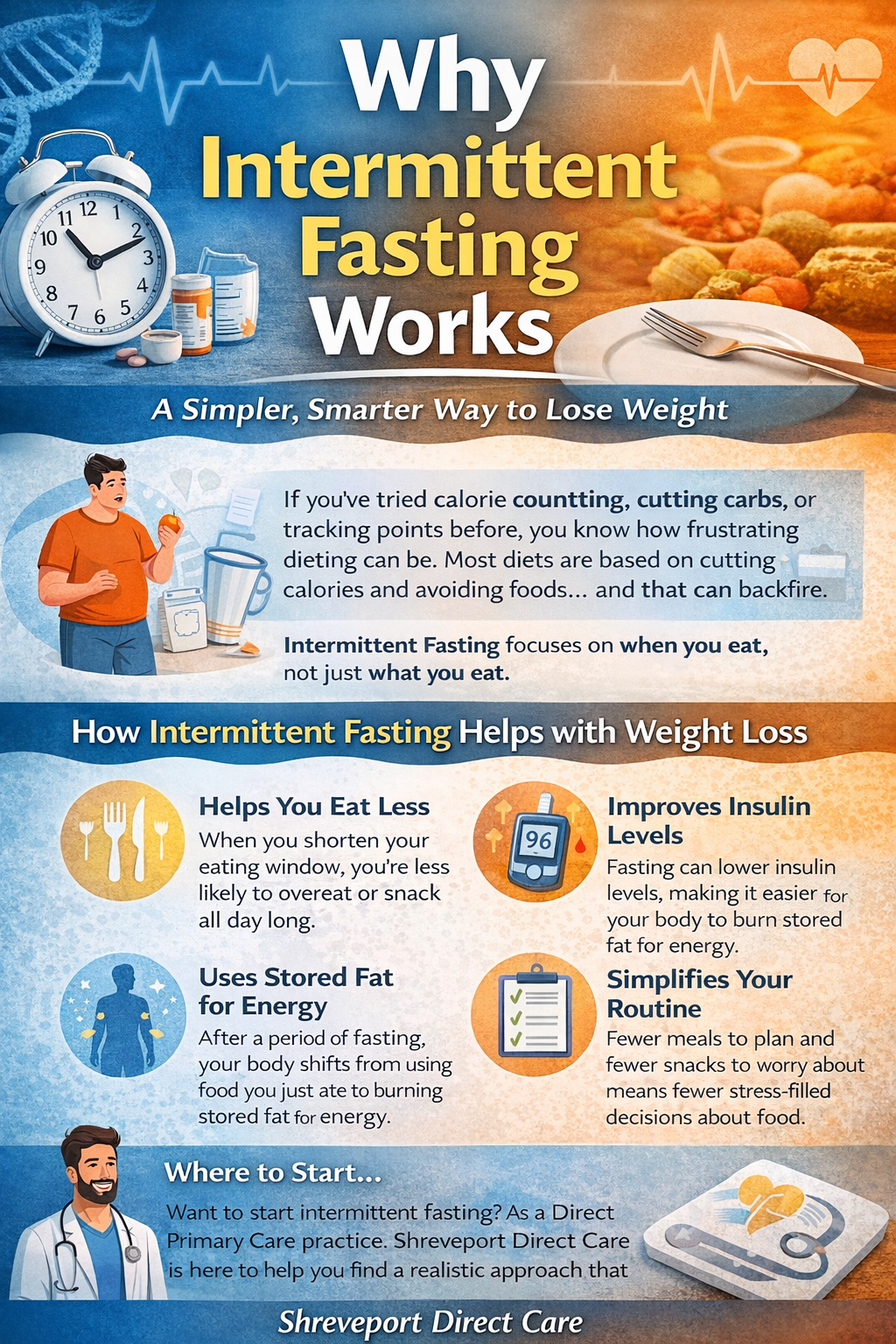
How Intermittent Fasting Helps With Weight Loss
Why Intermittent Fasting Works
There are several reasons intermittent fasting can work well for many people.
1. It Often Helps You Eat Less Without Constant Counting
One of the main reasons fasting helps with weight loss is simple. When you have a shorter eating window, you often eat fewer meals and fewer snacks.
That does not mean you should eat anything and everything during your eating window. But many people naturally take in fewer calories without having to track every bite.
For some patients, this feels like a huge relief. Instead of constantly thinking about food rules, they have a more clear routine.
2. It May Help Improve Insulin Sensitivity
Insulin is a hormone that helps move sugar from the blood into the cells. When insulin levels stay high too often, it can make it harder for the body to use stored fat for energy.
Fasting periods may give insulin levels a chance to come down. Over time, this may help the body respond better to insulin. That can support better blood sugar control and better metabolic health.
This is one reason intermittent fasting gets so much attention for patients dealing with weight gain, prediabetes, or insulin resistance.
3. It Helps the Body Access Stored Energy
When you eat, your body uses the food you just took in for fuel. When you go without eating for a period of time, your body starts looking for another energy source. That is when it can begin using stored energy, including stored fat.
This is one of the key reasons fasting can support fat loss.
Your body was built to handle periods without food. In fact, for most of human history, people did not eat all day long. The body knows how to switch between fed and fasted states. Intermittent fasting helps restore that rhythm.
4. It Can Make Eating Simpler
A lot of diets fail because they are too complicated.
Intermittent fasting can simplify life. Fewer meals may mean less meal prep, fewer food decisions, and less mental stress around eating. Many people like that it reduces the need for constant planning.
For someone with a busy schedule, this simple structure can make healthy habits easier to maintain.
5. It May Support Brain Health and Energy
Many people who practice intermittent fasting say they notice clearer thinking and more steady energy.
Part of this may be because the body can produce ketones during fasting. Ketones are an energy source the brain can use. Some research suggests this may support brain function and help protect long-term health.
People often describe feeling less sluggish and less controlled by cravings once they get used to fasting.
6. It May Support Healthy Aging
Research continues to look at how fasting affects inflammation, cell repair, and healthy aging. While there is still more to learn, early findings are promising.
Fasting may help reduce some of the wear and tear that constant eating can place on the body. That does not mean fasting is a miracle cure. But it may be one useful tool for people who want to improve long-term health.
Why Intermittent Fasting Feels Different From Other Diets
Many diets make you feel like you have to be perfect all the time. One bad meal can make you feel like you failed.
Intermittent fasting often feels different because it is more flexible. It is a framework, not a punishment. You do not have to count every calorie or follow a long list of rules. You simply learn to create healthy eating windows and make good food choices during those times.
That is why many people find it easier to stay consistent.
Consistency matters more than perfection.
A plan that works for a few weeks is not enough. The best approach is the one you can continue in real life.
Why You Can Trust This Approach
At Shreveport Direct Care, we are not interested in fad diets or empty promises. We believe in practical, evidence-based care that fits real life.
Intermittent fasting is not magic. It is not a shortcut that removes the need for healthy food, sleep, movement, and stress control. But it can be a powerful tool because it works with the body’s natural systems instead of fighting them.
We have seen people lose weight, improve their energy, and feel more in control of their eating by using fasting in a smart and steady way. For many, the biggest change is not just the scale. It is the feeling that food no longer controls the entire day.
That kind of freedom matters.
The Bottom Line
If you have struggled with dieting in the past, it does not mean you lack discipline. It may simply mean you were using a strategy that was too hard to maintain.
Intermittent fasting works for many people because it is simple, structured, and based on how the body naturally handles energy. It may help you eat less, improve insulin sensitivity, burn stored fat, and reduce the stress of constant food decisions.
Most of all, it offers something many diets do not: a plan that can actually fit into everyday life.
FAQs
What is the main reason intermittent fasting works?
Intermittent fasting works because it helps many people reduce overeating, lower snacking, and give the body time to use stored energy.
Does intermittent fasting work better than calorie counting?
For some people, yes. Intermittent fasting can feel simpler because it reduces the number of eating decisions during the day. Some people find it easier to follow than constant calorie counting.
How long does it take for intermittent fasting to work?
This depends on the person. Some people notice less bloating and fewer cravings within days, while weight loss may take several weeks of consistency.
Can intermittent fasting help with belly fat?
Intermittent fasting may help reduce overall body fat, including belly fat, when it leads to a calorie deficit and better eating habits over time.
Is intermittent fasting safe?
It can be safe for many adults, but not everyone. It is best to talk with a physician before starting, especially if you have diabetes, take medications, are pregnant, or have a history of disordered eating.
What can I drink while fasting?
Most people stick with water, black coffee, or unsweetened tea during a fasting window. Drinks with calories can break the fast.
How Shreveport Direct Care Can Help
At Shreveport Direct Care, we help patients build realistic weight loss plans that match their health goals, medical history, and daily routine. If you are interested in intermittent fasting, we can help you decide if it is a safe fit for you and show you how to start in a way that is practical and sustainable. You do not have to figure it out alone. We are here to guide you every step of the way.