
Memory Loss After 50: When It’s Normal, When It’s Not, and When to Get Evaluated
Memory Loss After 50
If you’re over 50 and noticing changes in your memory, it can feel scary.
Maybe you:
walk into a room and forget why you went there,
forget a name you “should” know,
lose your keys more often,
or feel more brain fog than you used to.
You might be thinking: “Is this normal aging, or do I need to be evaluated?”
Here’s the good news: many causes of memory trouble after 50 are treatable. And even when the cause is more serious, getting checked early helps.
This guide will help you understand:
what memory loss after 50 can look like when it’s normal,
the warning signs (including early signs of dementia),
common causes we can often improve,
what a memory test and medical work-up may include,
and what you can do today to protect your brain.
If you’re in Shreveport or Bossier, this also gives you a clear path to next steps.
Memory Loss After 50: What’s Normal Aging?
Let’s start with a big relief:
Some forgetfulness after 50 is normal.
As we age, the brain may take a little longer to “pull up” a memory. That can feel like memory loss, even when the brain is still working well.
Normal memory slips (very common)
These can happen more often after 50:
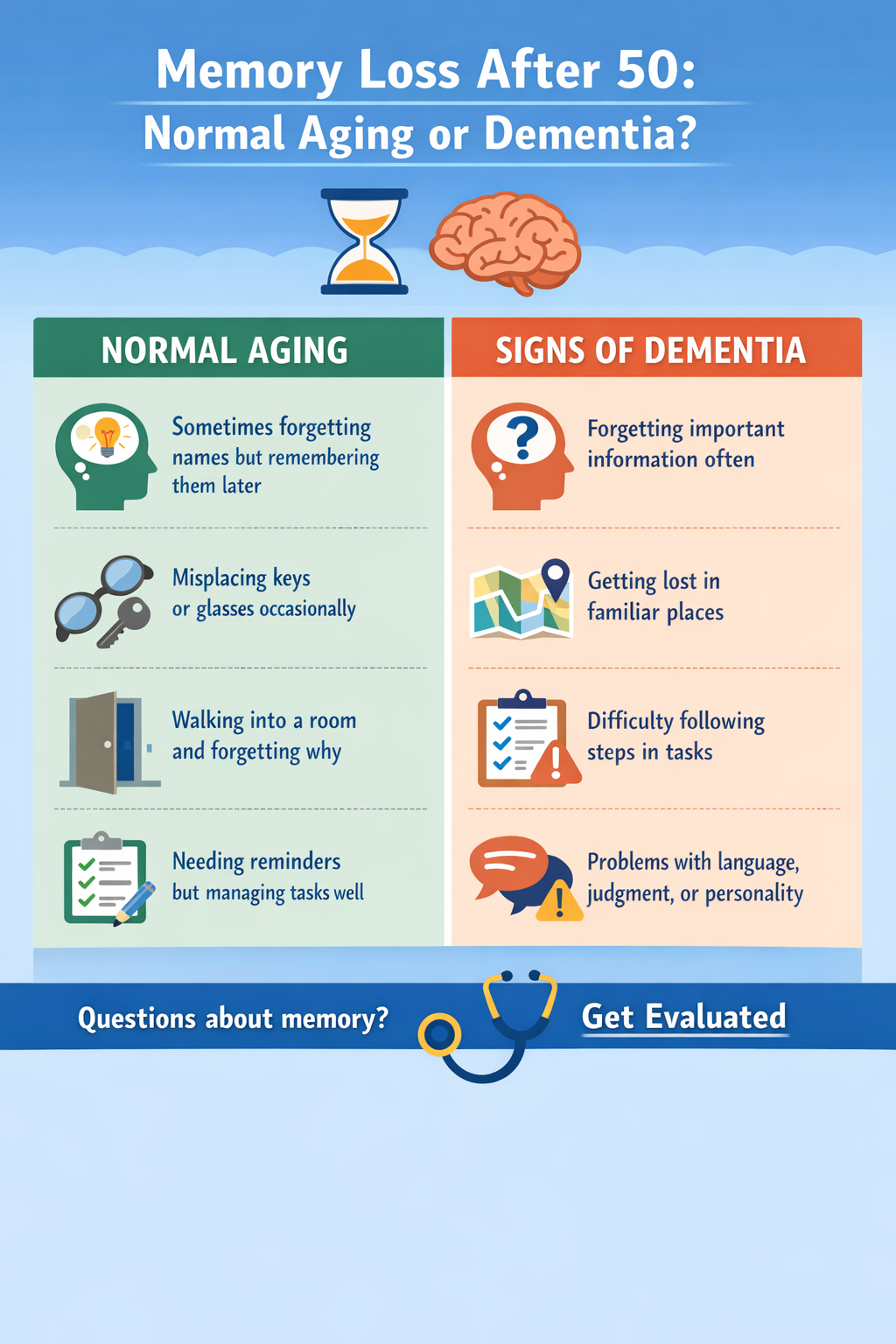
Forgetting a name, but remembering it later
Misplacing your phone or keys sometimes
Walking into a room and forgetting why
Needing lists or reminders more than before
Feeling more distracted when you multitask
Forgetting small details of a show or book, but remembering the main idea
A simple tip: memory vs. attention
A lot of “memory loss” is really attention overload.
If you’re stressed, tired, anxious, or rushing, your brain may not store information well. Then later it feels like you forgot, but really your brain never saved it clearly.
Normal vs. not normal (quick examples)
More likely normal aging
“It takes me longer to remember things, but I get there.”
“I lose stuff sometimes, but I can retrace my steps.”
“I forget a word, but it comes back.”
“I use reminders more than I used to.”
More concerning
“I repeat the same question often.”
“I get lost going to familiar places.”
“I can’t follow steps for a task I’ve done for years.”
“My memory problems are affecting driving, money, meds, work, or home life.”
If you’re unsure which group you fit into, a simple evaluation can help.
Normal Aging or Dementia
Memory Loss After 50: Warning Signs You Shouldn’t Ignore
Some symptoms are more than normal aging. These are the signs that should make you think, “I need a check-up.”
10 warning signs (including early signs of dementia)
Consider an evaluation if you notice several of these, or if they are getting worse:
Memory loss that disrupts daily life
Repeating stories, needing frequent reminders, forgetting important events.Trouble planning or solving problems
Struggling with bills, budgeting, or steps you used to do easily.Difficulty completing familiar tasks
Cooking common meals, using familiar tools, or keeping up at work becomes hard.Confusion with time or place
Losing track of dates, seasons, or where you are.Getting lost in familiar places
Driving a normal route and suddenly feeling turned around.New problems with words
Trouble finding common words or stopping mid-sentence often.Misplacing things in unusual places and not retracing steps
Putting keys in odd spots and not knowing how they got there.Changes in judgment
Unusual money choices, unsafe decisions, or risky behavior that’s not “you.”Pulling away from people or activities
Avoiding hobbies, friends, or conversation because it feels too hard.Changes in mood or personality
More fear, anger, suspicion, or big changes from your normal self.
A quick self-check
Ask yourself these 4 questions:
Is it new?
Is it getting worse?
Is it affecting daily life?
Are other people noticing it too?
If you said “yes” to two or more, it’s reasonable to schedule a visit and consider a memory test.
When to seek urgent care now
Some symptoms are emergencies, not “wait and see.”
Call 911 or go to the ER if there is:
sudden confusion (minutes to hours)
stroke signs: face droop, arm weakness, speech trouble
new severe headache
confusion with fever
head injury plus confusion
The Most Common Causes of Memory Problems (Many Are Treatable)
Here’s a key message:
Memory loss after 50 does not always mean dementia.
In primary care, we often find causes that can improve with the right plan.
1) Sleep problems (a top cause of brain fog)
Sleep is when your brain resets and stores memories.
Poor sleep can cause:
trouble focusing,
slower thinking,
mood changes,
and brain fog.
Common sleep issues after 50:
insomnia
sleep apnea (snoring, gasping, daytime sleepiness)
waking often to urinate
restless sleep
If sleep improves, many people feel sharper within weeks.
2) Stress, anxiety, depression, and grief
High stress makes it hard to concentrate and store new memories.
Depression can also look like memory loss because it can cause:
low energy,
slower thinking,
low motivation,
poor focus.
Treating mood and stress can improve memory and thinking.
3) Medication side effects (very common)
Some medications can cause confusion, sleepiness, or memory trouble—especially when combined.
A big group to know about is medicines with anticholinergic effects, which can worsen confusion and memory in older adults.
Examples that may cause problems for some people:
certain sleep medicines
some anxiety medicines
strong antihistamines
some bladder medicines
some pain medicines
some muscle relaxers
Important: Don’t stop meds on your own. Bring your full list (including over-the-counter meds and supplements) to your visit so you can make a safe plan.
4) Thyroid, kidney, or liver problems
When these are off, people may feel:
tired,
slower,
foggy,
forgetful.
Simple blood tests can help screen for this.
5) Vitamin and nutrition issues (including B12)
Low B12 can affect thinking and nerve function in some people.
Also, extreme dieting or poor nutrition can worsen brain fog. Your brain needs enough:
protein,
fluids,
vitamins and minerals.
6) Hearing loss (often missed)
Hearing loss can look like memory trouble because you may not fully “catch” the conversation. Then it feels like you forgot, but you never heard it clearly.
If you turn up the TV or often say “what?”, a hearing check can be helpful.
7) Alcohol and other substances
Alcohol can worsen sleep and short-term memory. It often affects people more strongly as they age.
This is not about blame. It’s about finding what’s contributing.
8) Heart and metabolic health (the heart–brain link)
The brain needs good blood flow and steady energy.
Conditions that can increase risk over time include:
diabetes / insulin resistance
high cholesterol
heart disease
smoking
obesity
Improving these can help protect brain health long-term.
What to Expect From a Memory Evaluation in Shreveport
If you’re asking, “Do I need to be evaluated?” here’s a simple rule:
If you’re worried enough to read this article, it’s reasonable to get checked.
A good evaluation doesn’t just say “you’re fine.”
It answers: What’s causing this, and what can we do next?
Step 1: Your story (this is the most important part)
We’ll talk about:
when it started
what’s changing (and what’s not)
real examples from daily life (driving, cooking, money, meds, work)
sleep, mood, stress
medical history and family history (when helpful)
If you want, a spouse or family member can share what they’ve noticed.
Step 2: A simple memory test (screening)
A memory test in primary care is usually quick and checks things like:
short-term memory,
attention,
language,
problem solving.
It is not a pass/fail test. It helps guide next steps and gives a baseline to track over time.
Step 3: Exam and basic brain checks
We look for signs that point to other causes, like balance issues or weakness.
Step 4: Lab work to look for treatable causes
Labs vary by person, but often check for things like:
thyroid issues,
vitamin problems (like B12),
blood counts and basic chemistry,
diabetes risk and cholesterol (when needed).
Step 5: Imaging only when it makes sense
Not everyone needs a CT or MRI. We consider it more when there are red flags, fast changes, or new neurologic symptoms.
Step 6: A clear plan
A good plan may include:
sleep testing or sleep coaching,
medication review and safer swaps,
treating anxiety/depression if present,
nutrition and movement steps,
managing blood pressure and metabolic risks,
and follow-up to see how you’re doing.
Why a membership clinic can help
With memory concerns, time matters. A membership practice can make it easier to have:
longer visits,
fewer rushed decisions,
better follow-up,
and a step-by-step plan.
If you’re looking for a memory evaluation in Shreveport, this style of care can be a strong fit.
What You Can Do Today to Support Brain Health After 50
Even before your visit, these steps help many people.
1) Sleep first
Aim for 7–9 hours most nights
Keep a steady bedtime and wake time
If you snore loudly or feel sleepy in the day, ask about sleep apnea
2) Move your body most days
Start with walking (even 10 minutes)
Add strength work 2–3 days/week if you can
3) Eat for steady brain energy
Try:
protein at each meal,
vegetables most days,
fewer sugary drinks and ultra-processed snacks,
enough water.
4) Keep your brain active and social
Small actions matter:
weekly coffee with a friend,
hobbies,
learning something new,
volunteering.
5) Reduce daily overload (helps forgetfulness after 50)
Try:
one calendar system,
one “home spot” for keys/wallet,
fewer phone notifications,
one task at a time when possible.
A simple 2-week starter plan
Pick 3–5:
Walk 10 minutes after dinner, 5 days/week
Set a consistent sleep time
Protein at breakfast
Limit alcohol days per week
Make a complete medication list for your visit
Schedule a hearing check if needed
How Shreveport Direct Care Can Help
Shreveport Direct Care is a membership-based primary care clinic in Shreveport, Louisiana. For memory loss after 50, we focus on clear answers and a plan you can actually follow.
That usually means:
taking time to hear the full story,
doing a simple memory test when appropriate,
looking for treatable causes of brain fog,
and building a prevention plan to protect brain health.
If you’re worried about forgetfulness after 50 or noticing early signs of dementia, you don’t have to guess.
FAQs
1) Is memory loss after 50 always dementia?
No. Many people have memory issues from sleep problems, stress, depression/anxiety, medication side effects, thyroid issues, or vitamin problems.
2) What are the early signs of dementia?
Signs include memory changes that disrupt daily life, getting lost in familiar places, trouble with familiar tasks, major judgment changes, and big mood/personality shifts.
3) Can brain fog be caused by poor sleep?
Yes. Poor sleep is one of the most common causes of brain fog and memory trouble after 50.
4) What medicines can worsen memory after 50?
Some medicines—especially those with anticholinergic effects—can cause confusion and memory problems in older adults. A medication review can help.
5) What does a memory test involve?
Most primary care memory tests are short screenings that check memory, attention, and language. They help guide next steps and track changes.
6) Can heart health affect brain health?
Yes. Blood pressure, diabetes risk, and heart disease can affect brain health over time, so managing these risks matters.
References
National Institute on Aging (NIA) — Age-Related Forgetfulness or Signs of Dementia? https://www.nia.nih.gov/health/memory-loss-and-forgetfulness/age-related-forgetfulness-or-signs-dementia
National Institute on Aging (NIA) — Memory Problems, Forgetfulness, and Aging. https://www.nia.nih.gov/health/memory-loss-and-forgetfulness/memory-problems-forgetfulness-and-aging
Alzheimer’s Association — 10 Early Signs and Symptoms of Alzheimer’s & Dementia. https://www.alz.org/alzheimers-dementia/10_signs
CDC — Signs and Symptoms of Alzheimer’s Disease. https://www.cdc.gov/alzheimers-dementia/signs-symptoms/alzheimers.html
CDC — Signs and Symptoms of Dementia (Normal age-related changes vs concerning signs). https://www.cdc.gov/alzheimers-dementia/signs-symptoms/index.html
NIA brochure (PDF) — Medications’ Effects on Older Adults’ Brain Function. https://www.nia.nih.gov/sites/default/files/d7/MedAgeBrain-Brochure.pdf
NIA news — Use of anticholinergic drugs linked to higher dementia risk. https://www.nia.nih.gov/news/use-anticholinergic-drugs-linked-higher-dementia-risk
JAMA Internal Medicine — Anticholinergic Drug Exposure and the Risk of Dementia. https://jamanetwork.com/journals/jamainternalmedicine/fullarticle/2736353
American Heart Association (AHA) scientific statement — Cardiac Contributions to Brain Health. https://www.ahajournals.org/doi/10.1161/STR.0000000000000476
AHA Professional Heart Daily commentary — Brain and Heart Health: At a Crossroads. https://professional.heart.org/en/science-news/cardiac-contributions-to-brain-health/commentary
UCSF Memory and Aging Center — Healthy Aging: Symptoms to Watch For. https://memory.ucsf.edu/brain-health/healthy-aging