
Internal Medicine Explained: Managing Chronic Symptoms
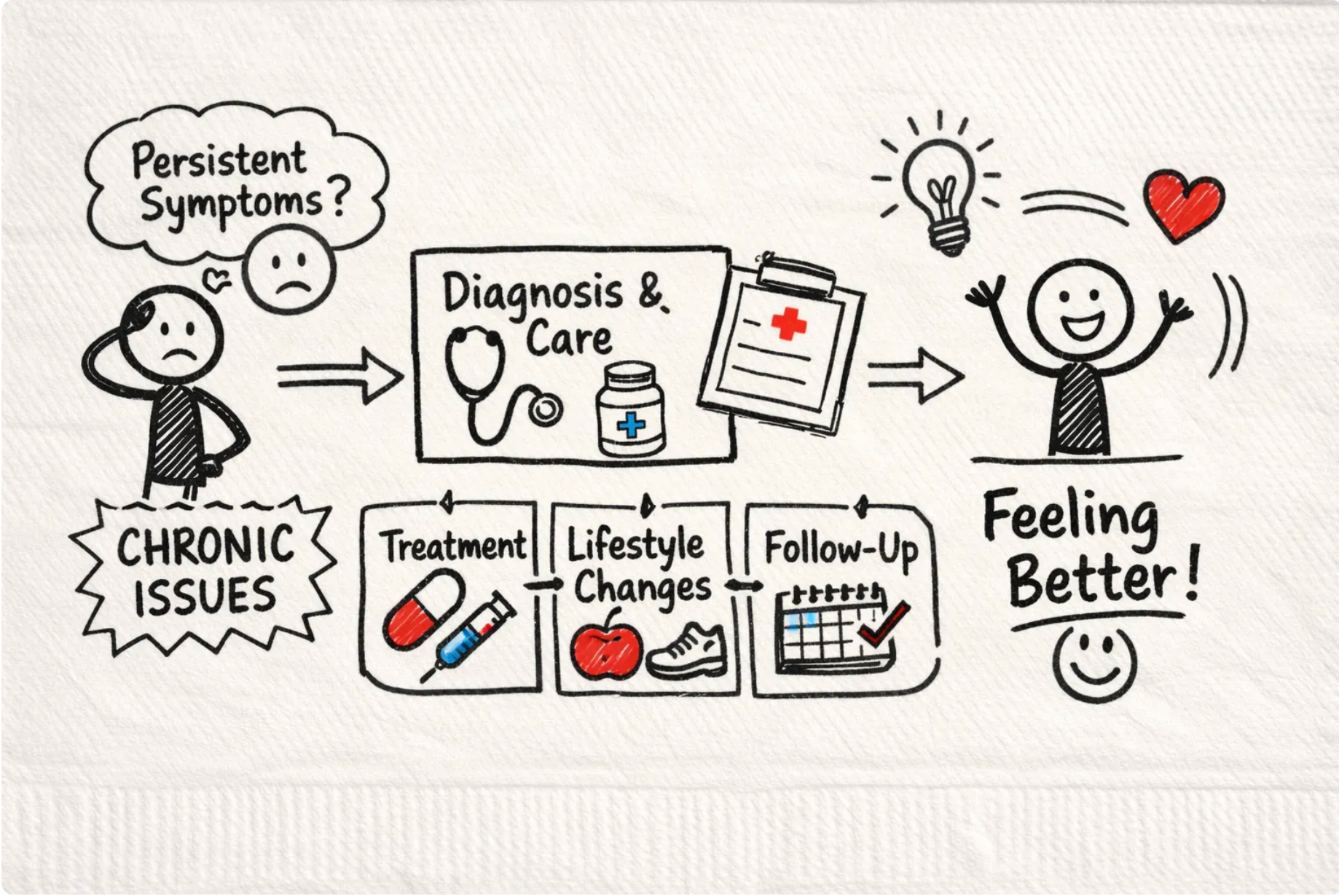
When symptoms persist or several health problems overlap, having a clinician who sees the whole person matters. Internal medicine focuses on adults with chronic, complex conditions and helps make sense of symptoms that don't respond to quick fixes. More than half of adults live with at least one chronic condition, so continuity with an experienced clinician can reduce unnecessary visits and missed diagnoses. An internist combines diagnostic reasoning, prevention, and long-term management to coordinate care across conditions and specialists.
Below we explain what internists manage day-to-day and how they partner with you. That includes common chronic conditions—diabetes, COPD, heart disease, thyroid and kidney disorders, and arthritis—plus how subspecialists fit into care and when referrals are needed. If your symptoms aren't improving, keep reading to learn how an internist can diagnose, coordinate, and manage your care with continuity and clarity.
What you need to know
Here are quick essentials to help you decide when to see an internist and how to prepare for a visit. These points show how internal medicine approaches chronic symptoms and what to bring to make appointments more productive.
Role of internists: diagnose, prevent, and manage complex chronic conditions in adults using a systems approach and continuity to address persistent symptoms.
Start with history: a careful interview, a review of current medications, and home monitoring often point the way; bring a seven-day log and recent home readings.
Manage with targets: set individualized A1c and blood pressure goals with your clinician, then agree on practical steps and timely follow-up.
Track simply: short, consistent logs (morning blood pressure, one fasting glucose, brief symptom notes) reveal trends an internist can act on.
When to choose an internist: see an internist if you have multiple chronic issues, several specialists, or unexplained symptoms.
What internal medicine does and why it matters for chronic symptoms
Internal medicine doctors provide ongoing adult care aimed at diagnosing, preventing, and managing chronic and complex problems. Internists take a systems approach: they look for patterns in symptoms, tests, and treatments rather than focusing only on isolated results. That combination of wide-ranging knowledge and focused expertise makes internal medicine doctors useful when long-term coordination and problem-solving are needed.
Internists routinely manage conditions that often cause ongoing symptoms and disability. Below is a quick reference you can scan to see if your problem typically falls under internal medicine care.
Hypertension: long-term blood pressure control to lower stroke and heart attack risk.
Diabetes: glucose management, complication screening, and medication adjustment.
Heart disease: medical management of ischemia, heart failure, and rhythm disorders.
COPD and chronic lung disease: symptom control, inhaler optimization, and exacerbation planning.
Thyroid disease: hormone dosing, symptom monitoring, and lab follow-up.
Chronic kidney disease: staging, blood pressure and medication management, and referral planning.
Arthritis and chronic musculoskeletal pain: diagnosis, non-opioid strategies, and functional goals.
When a problem needs focused expertise, internists arrange referrals to subspecialists such as cardiology for heart function, endocrinology for hormone and metabolic issues, nephrology for kidney disease, and pulmonology for complex lung conditions. Rheumatology handles autoimmune and inflammatory disease, gastroenterology focuses on digestive disorders, and oncology manages cancer care. Your internist stays involved: they coordinate testing, request procedures when needed, and integrate specialists' recommendations back into your long-term plan to reduce fragmented care.
An internist looks beyond individual test results to the bigger picture of your health, which speeds accurate diagnosis and improves long-term control. The next section explains how internists evaluate common chronic problems step by step so you know what to expect at your visit.
How internists diagnose diabetes and hypertension
Diagnosis usually begins with a careful interview and a review of home readings. Internists examine symptom timing, a complete medication list, and any home logs to spot patterns that office readings may miss. Clear home records often change testing and treatment choices, so bring dated entries for a week. Below are the simple items patients are typically asked to record for a week.
Time of reading and device used.
Blood pressure or glucose value and whether you were fasting.
Symptoms, recent medications or missed doses, and activity.
Objective testing confirms and stages disease, then guides therapy choices. Standard labs include hemoglobin A1c and fasting glucose, a lipid panel, and a basic metabolic panel to check kidney function and electrolytes; a urine albumin-to-creatinine ratio is useful before changing medications. Expect A1c every three months while therapy is changing, then every six months once stable; those numbers, together with kidney tests, often determine selection of glucose-lowering and blood pressure medications. For more on recommended laboratory monitoring for diabetes care, see the current laboratory guidelines and recommendations for monitoring diabetes management: laboratory monitoring recommendations for diabetes.
Some situations need more than office checks. Ambulatory blood pressure monitoring helps when readings are inconsistent or to detect masked hypertension, and EKG or echocardiogram may be added for chest symptoms, murmurs, or suspected heart damage. Retinal screening and nephrology or endocrinology referrals follow when there is progressive organ damage. Urgent escalation is required for very high sustained numbers, new signs of organ dysfunction, or failure of standard therapy.
Managing chronic conditions: building a patient-centered care plan
Start by setting clear, individualized targets together. Review current risks and recent numbers with your internal medicine doctor. Internists can explain what those risks mean for daily life, and then, through shared decision making, suggest practical targets for A1c and blood pressure that match your priorities. Your internist may use a shared-decision phrase like this: "Here are your risks, here is a realistic target we can aim for, and think about one behavior you can start this week." They may ask you to write down or specifically name one or two immediate behavior goals so you leave the visit with a concrete first step. This approach reflects why the doctor–patient relationship matters in setting realistic, sustainable goals.
Medications are one tool but not the whole plan. Clinicians often start low and increase dose slowly when needed, combine therapies when evidence supports better control, and monitor labs to catch side effects early. Expect frequent contact while doses are adjusted: a phone check-in or secure message in one to two weeks, lab checks at two to six weeks if indicated, monthly contact until stable, and routine visits every three months once control is steady.
Prevention and daily habits deliver the largest long-term benefits, so your internist will include short, actionable items such as logging blood sugars, walking 30 minutes five days a week, maintaining a consistent sleep window, joining a smoking-cessation program, and checking vaccine status. Your doctor will schedule screenings to diagnose chronic disease early, when treatment or lifestyle modifications are most likely to make a difference. This can include tests such as urine albumin and eGFR for kidney health, retinal exams for diabetes, and regular foot checks.
These plans follow evidence-based standards and the expectations of ABIM certification. The next section shows how progress is measured with data and how plans are adjusted when goals are not met.
Symptom tracking and treatment adherence: practical, day-to-day tips
Keep tracking simple: consistent, brief logs beat complex systems. For most patients a seven-day starter log reveals trends your clinician can act on; keep entries factual so the data is usable during a visit. Below are the core items that really help clinicians make decisions.
Home blood pressure: time, posture (sitting/standing), and which cuff you used.
Glucose: fasting and premeal values with time noted.
Weight: same scale, same time of day when possible.
New or changing symptoms: onset, severity, and whether they woke you or limit activities.
Small routines improve medication adherence more than motivation alone. Use a pill organizer or blister packs, set timed phone alarms, and tie medicine to an existing habit such as brushing teeth or breakfast so doses become automatic. Ask your pharmacy about synchronization so refills align, and use direct messaging with your clinician for quick questions during titration.
When you bring tracking data to a visit or telehealth encounter, choose the easiest format: a printed seven-day log, an exported app report, or a quick photo of your log sent by text. Clinicians look for patterns rather than single values: sustained elevation, repeating lows, or steady weight change matter more than one abnormal day. If a trend persists across the starter week or you report recurrent symptoms, the team will discuss a medication change or an in-person evaluation and set a clear follow-up plan.
How a multidisciplinary internal medicine team coordinates multidisciplinary care
When care involves multiple providers, coordination saves time and reduces duplication. In our Shreveport internal medicine clinic, a small, consistent team manages every step so nothing falls through the cracks. Continuity, access, and comprehensive primary care are built into our workflows to reduce repeated histories and tests.
The internist leads diagnosis and the overall plan while a nurse care manager handles results, schedules follow-ups, and keeps the care plan on track so you spend less time repeating your story.
The clinic pharmacist reviews interactions, simplifies regimens, and coordinates timely refills. They communicate recommended dosing changes with the physician and with you to avoid confusion. A diabetes educator teaches monitoring and insulin skills, runs focused titration visits, and checks in by phone until targets stabilize.
The dietitian turns labs and home logs into realistic meal plans and short-term goals, then follows up to keep changes sustainable. When you need more specialized input, an internal medicine doctor can arrange warm handoffs to cardiology, nephrology, or ophthalmology with shared notes and expedited scheduling so care stays coordinated and faster.
Workflows at Shreveport Direct Care prioritize quick coordination. We offer same-day primary care for urgent medication changes, extended appointments for complex problems, and direct messaging for fast medication adjustments or clarifying results. For example, a newly diagnosed patient with diabetes and hypertension will get baseline labs and home log review, phone check-ins while medicines are titrated, an educator visit, a retina referral, and pharmacy reconciliation within days- a significant benefit of our membership. That sequence keeps the care team aligned and reduces the time between diagnosis and stabilization.
When to see an internist versus other clinicians and trusted resources
Choose care based on the problem rather than prestige. Adults with multiple chronic conditions or several specialists involved benefit from an internist for coordination and medication management, while family physicians are ideal for whole-family continuity that includes children and older adults. See a specialist when organ-specific testing, procedures, or focused therapy are required, for example a cardiologist for advanced rhythm problems or a pulmonologist for severe lung disease.
Training shapes how a clinician approaches complex problems. The typical pathway is four years of medical school followed by three years of residency in adult-focused medicine; some physicians add fellowship training for subspecialty skills and many maintain board certification by the American Board of Internal Medicine. Board certification shows a physician has passed rigorous testing and participates in ongoing assessment, which matters when you need diagnostic breadth and long-term planning.
Use trustworthy sources to stay informed and avoid rumor. Professional and guideline sites worth bookmarking include the American College of Physicians, ABIM, Annals of Internal Medicine, Journal of General Internal Medicine, ADA guideline pages, ACC/AHA guidance, and the CDC patient pages. If you have new or worsening symptoms, start a seven-day log of blood pressure or glucose and contact your clinic so that data makes follow-up visits more productive. For additional perspective on choosing a clinician and continuity of care, see our guidance on building a strong doctor–patient relationship.
Why internal medicine matters for your chronic symptoms
Internal medicine focuses on finding the cause of persistent symptoms and building a long-term plan that fits your life. Internists start with a careful interview and home monitoring to spot patterns a single short visit can miss, then coordinate a team-based approach with regular follow-up and practical lifestyle steps
If you would like to learn more about membership options at Shreveport Direct Care or how our direct primary care or concierge models might be right you, please call or text 318-588-7060.
FAQs About Internal Medicine In Shreveport/ Bossier
What is internal medicine?
Internal medicine is a medical specialty focused on adult health. Internal medicine doctors, also called internists, diagnose, prevent, and manage chronic and complex health problems in adults.
What does an internist treat?
An internist commonly treats high blood pressure, diabetes, heart disease, COPD, thyroid disease, kidney disease, arthritis, and other long-term adult health problems. They also help when symptoms are ongoing, unclear, or involve more than one body system.
When should you see an internist?
You should consider seeing an internist if you have more than one chronic condition, if you see several specialists, or if you have symptoms that are not getting better. An internist can help connect the pieces and create one clear care plan.
How does an internist diagnose chronic symptoms?
An internist usually starts with a detailed history, medication review, and home readings like blood pressure or glucose logs. They may also order lab work, heart testing, or other studies based on your symptoms and risk factors.
What should I bring to an internal medicine visit?
Bring your medication list, recent home blood pressure or blood sugar readings, and a short symptom log if you have one. A simple seven-day record can help your doctor spot patterns and make better treatment decisions.
Can an internist help manage diabetes and high blood pressure?
Yes. Internists commonly diagnose and manage both diabetes and high blood pressure. They help set treatment goals, adjust medication, monitor labs, and follow your progress over time.
Do internists refer to specialists?
Yes. Internists often refer patients to specialists when a problem needs more focused testing or treatment. Even after a referral, the internist often stays involved to help coordinate the overall plan.
How is internal medicine different from a specialist?
An internist looks at the whole adult patient, not just one organ or condition. A specialist focuses on one area, such as the heart, kidneys, or lungs. Internal medicine is often the best starting point when symptoms are ongoing or involve several issues at once.