
What to Look for in a New Doctor — Continuity, Access, and Comprehensive Care
What to look for in a new doctor
When people start looking for a new doctor, they often focus on surface details such as office location, office hours, or insurance networks. While those things matter, they are not the factors that most strongly influence long-term health outcomes.
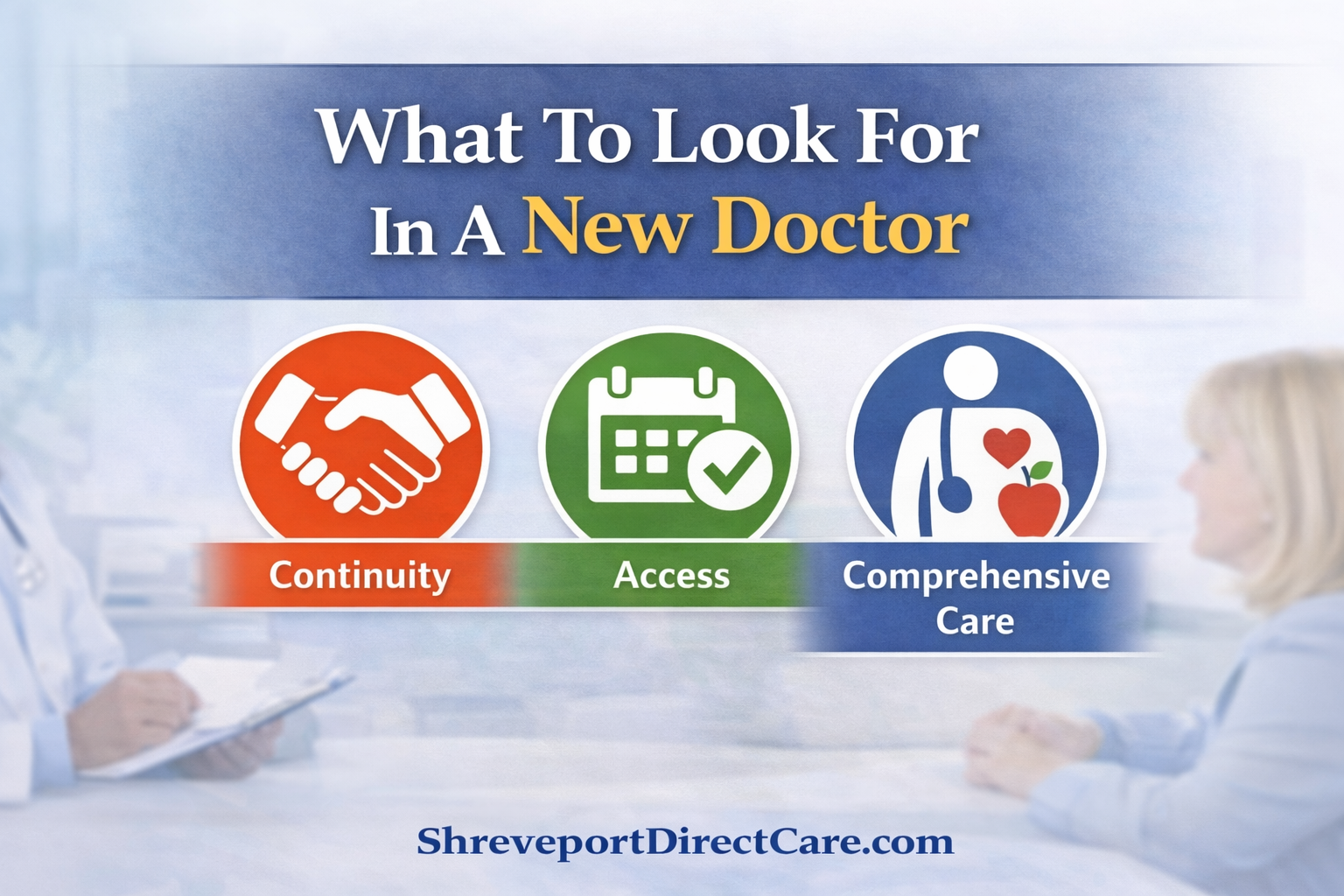
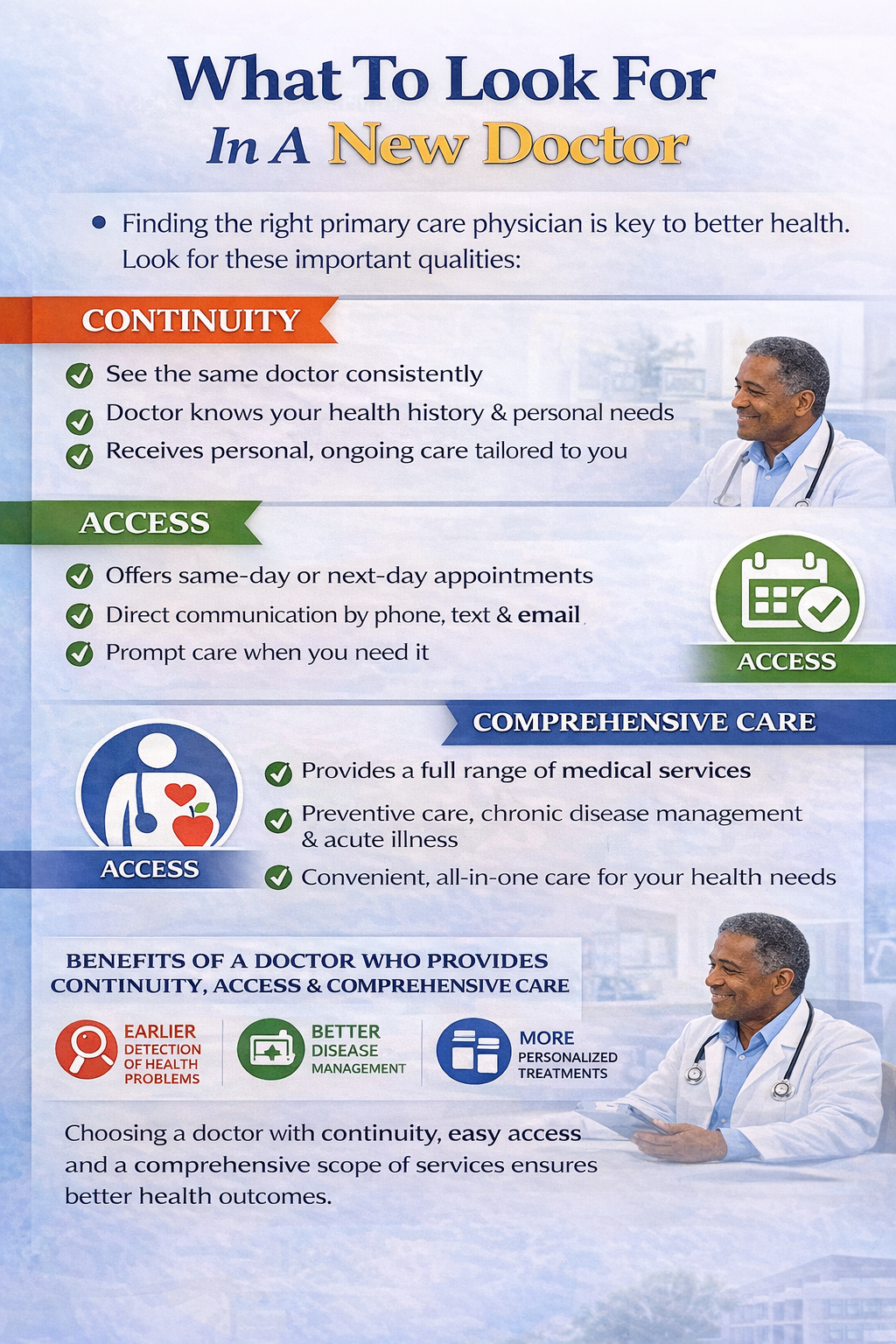
The most important characteristics of high-quality comprehensive primary care are much deeper. Three of the most important features patients should look for are:
continuity of care
easy access to care
a comprehensive scope of services
These elements determine whether your physician truly understands your health, whether you can get help when you need it, and whether most of your health concerns can be addressed in one place.
Together, these qualities allow a physician to provide whole person care, guide prevention, and build the kind of partnership that improves health over time.
Let’s explore what each of these means and how they affect your experience as a patient.
Continuity of Care: Why Seeing the Same Doctor Matters
Continuity of care means you consistently see the same physician over time rather than a rotating list of providers. This allows your doctor to understand your health history, your lifestyle, and your personal goals.
At first glance, continuity may seem like a convenience. In reality, it is one of the most powerful tools in medicine.
Why Continuity Improves Care
Health is rarely a single moment in time. Instead, it unfolds gradually through patterns.
A physician who has cared for you over several years notices subtle changes that might otherwise go unnoticed.
For example, imagine a patient named Michael who has been seeing the same doctor for several years.
Over time, the physician notices:
his blood pressure has slowly increased
his weight has gradually risen
his cholesterol levels are trending upward
None of these changes look alarming during any single visit. But together, they signal an increased risk for heart disease.
Because the physician knows Michael well, they can intervene early with lifestyle changes and preventive strategies before the condition becomes severe.
Without continuity, those patterns might not be recognized until the patient develops a more serious health problem.
The Role of Long-Term Physician Relationships
The heart of continuity is a long-term relationship between patient and physician.
As visits accumulate over the years, the physician gains a deep understanding of:
your health history
your family history
your lifestyle habits
how your body responds to treatments
This familiarity allows care to become more precise.
For example, a physician who knows a patient well may recognize that a sudden drop in energy or mood is unusual for them and deserves investigation.
To a physician meeting the patient for the first time, that change might appear insignificant.
Tracking Health Trends Over Time
Another important part of continuity is long-term health tracking.
Over years of care, physicians observe trends in:
blood pressure
weight
lab values
medication responses
chronic conditions
This historical perspective often leads to earlier detection of disease.
Consider a patient whose fasting blood sugar slowly rises from 90 to 105 over several years. A physician with continuity may recognize this as early insulin resistance and help the patient reverse it with lifestyle changes.
Without continuity, the patient might not receive attention until diabetes is fully developed.
Coordinated Care Across the Healthcare System
Patients frequently see specialists, undergo imaging studies, or receive hospital care.
Without coordination, these experiences can become fragmented.
A physician providing continuity acts as the central coordinator for the patient’s care. They review specialist reports, interpret test results, and integrate recommendations into a clear plan.
This oversight prevents conflicting treatments and ensures that all aspects of care remain connected.
Easy Access to Care: Why Timely Care Matters
Access to care is another crucial factor when choosing a doctor.
Easy access means patients can reach their physician quickly when questions or health concerns arise.
In many traditional systems, patients may wait weeks for an appointment. When symptoms appear suddenly, this delay can create frustration and anxiety.
Good access changes this experience entirely.
Why Access Improves Health
When care is difficult to obtain, many people delay seeking help. They wait until symptoms worsen before scheduling a visit.
Easy access encourages patients to seek care early, when problems are easier to treat.
For example, imagine a patient develops symptoms of a urinary infection.
If they can see their doctor the same day, the condition can be treated quickly with minimal discomfort.
If they must wait two weeks for an appointment, the infection may worsen and require urgent care or emergency treatment.
Same-Day and Next-Day Appointments
One of the most valuable forms of access is timely scheduling.
Practices that offer same-day or next-day appointments allow patients to receive care when symptoms first appear.
This approach improves outcomes for many common conditions, including:
infections
asthma flare-ups
injuries
medication reactions
Patients feel reassured knowing that help is available when they need it.
Direct Communication With Your Physician
Another important aspect of access is the ability to communicate with your doctor between visits.
Not every question requires a full appointment. Sometimes patients simply need quick guidance.
For example, a patient might ask:
whether a medication side effect is normal
whether a child’s fever requires evaluation
whether a symptom should be monitored or treated
Practices that allow direct communication through phone or messaging help patients receive timely advice.
This accessibility strengthens the doctor–patient relationship and prevents unnecessary visits.
Flexible Visit Options
Modern medical care also benefits from flexibility.
Some concerns require in-person evaluation, while others can be addressed through virtual visits.
Practices that offer multiple ways to connect with a physician make care more convenient for patients with busy schedules.
Flexibility ensures that care remains accessible even when life becomes complicated.
Comprehensive Scope of Services: Why Breadth of Care Matters
The third important feature to look for in a new physician is a comprehensive scope of services.
Comprehensive primary care means the physician can address most routine health needs in one place.
Instead of sending patients to multiple clinics for common issues, the primary care physician manages a wide range of concerns.
This approach supports whole person care, where the physician understands how different aspects of health interact.
Preventive Care: The Foundation of Long-Term Health
Preventive care focuses on identifying health risks before disease develops.
This includes services such as:
annual wellness visits
blood pressure monitoring
cholesterol screening
cancer screenings
vaccination updates
Prevention allows physicians to intervene early and reduce long-term health risks.
For example, a patient with borderline cholesterol levels may benefit from simple lifestyle changes rather than waiting until medication becomes necessary.
Managing Chronic Conditions
Many adults live with chronic conditions such as:
diabetes
thyroid disease
asthma
high cholesterol
These conditions require ongoing monitoring and adjustment.
A comprehensive primary care physician helps patients manage these diseases through regular visits, medication adjustments, and lifestyle guidance.
Because the physician understands the patient’s history and habits, treatment plans can be tailored to the individual.
Caring for Acute Illness
In addition to prevention and chronic disease management, primary care physicians treat many everyday health concerns.
These include:
respiratory infections
minor injuries
rashes
digestive problems
headaches
When patients rely on a single physician for these issues, care becomes more consistent and coordinated.
The doctor already understands the patient’s medical history and can make decisions quickly.
Bringing It All Together
When continuity, access, and comprehensive care are combined, the patient experience changes dramatically.
Instead of feeling like a series of disconnected visits, healthcare becomes a long-term partnership.
A physician who knows you well, is available when you need help, and can address most of your health concerns in one place is able to guide your health far more effectively.
Patients often notice several outcomes from this approach:
earlier detection of health problems
improved chronic disease control
fewer unnecessary urgent care visits
more personalized treatment plans
greater confidence in medical decisions
Most importantly, patients feel supported in their journey toward better health.
Key Takeaway
When searching for a new doctor, look beyond convenience or insurance networks.
The most effective physicians provide:
continuity of care, allowing them to understand your health story
easy access to care, ensuring help is available when you need it
a comprehensive scope of services, addressing most of your health needs in one place
Together, these elements create the foundation of high-quality comprehensive primary care, where prevention, treatment, and long-term health guidance come together in a meaningful partnership between patient and physician.
If You Are Looking For Comprehensive Primary care in Shreveport/ Bossier
Patients searching for comprehensive primary care in Shreveport often want something simple: a doctor who knows them, is available when they need help, and can manage most of their health concerns in one place. At Shreveport Direct Care, the care model is designed to support exactly that. By keeping a smaller patient panel and focusing on relationship-based medicine, the practice prioritizes continuity of care, allowing patients to see the same physician consistently over time. This long-term relationship helps your doctor understand your medical history, lifestyle, and health goals, which leads to more personalized care and earlier recognition of health changes.
Another key benefit of the practice is easy access to care. Many people searching for a primary care doctor in Shreveport are frustrated with long waits for appointments or difficulty reaching their doctor. At Shreveport Direct Care, patients often have faster scheduling options and more direct communication with their physician. This means patients can get answers to questions, guidance on symptoms, or timely appointments without waiting weeks. When care is easier to access, patients are more likely to seek help early, which often leads to better health outcomes.
The practice also emphasizes a comprehensive scope of services, which is another important feature people look for when choosing a primary care physician in Shreveport. Instead of managing only a narrow set of concerns, comprehensive primary care focuses on prevention, acute illness, and long-term health management. At Shreveport Direct Care, patients can receive preventive screenings, chronic disease management, lifestyle guidance, and treatment for common illnesses within the same practice. This coordinated approach helps patients avoid fragmented care and unnecessary referrals while keeping their health plan organized and consistent.
By combining continuity of care, easy access to care, and a comprehensive scope of services, Shreveport Direct Care provides a more personalized approach to primary care for individuals and families in the Shreveport area. For patients searching for a family doctor in Shreveport or a physician who focuses on prevention and long-term health, this model offers a simpler and more relationship-centered way to experience healthcare.
Please text or call Dr. Bass directly at 318-588-7060 if you are interested in our membership model, have questions, or would like to set up a Meet and Greet.