
Why a Strong Doctor–Patient Relationship Is the Foundation of Comprehensive Primary Care
Building a Strong Doctor Patient Relationship
When people begin searching for a new physician, they often focus on things like location, insurance coverage, or office hours. Those factors matter. But the single most important element of comprehensive primary care is something much deeper: the doctor–patient relationship.
A strong relationship between a patient and their physician transforms healthcare from a series of quick appointments into an ongoing partnership. Instead of feeling like a number in a system, patients feel known and understood. This relationship is also what allows a physician to deliver true whole person care and maintain continuity of care over time.
In this post, we will explore why the doctor–patient relationship matters, how it develops, and how patients searching for a new physician can recognize a practice that truly prioritizes it.
What a Strong Doctor–Patient Relationship Really Means
A strong doctor–patient relationship is built on trust, communication, and familiarity. It means your physician understands more than just your medical chart. They understand your history, your habits, your stressors, and your goals for health.
In comprehensive primary care, the doctor is not simply addressing a single symptom. Instead, the physician is responsible for guiding the patient’s health over many years.
This type of relationship allows a physician to answer questions like:
What does “normal” look like for this patient?
What stresses are affecting their health right now?
What patterns have developed over the past several years?
What health goals matter most to them?
Without a relationship, healthcare becomes reactive. With a relationship, healthcare becomes proactive.
Why This Relationship Is So Beneficial
Many patients do not realize how powerful a strong physician relationship can be until they experience it.
Imagine two different scenarios.
In the first, a patient visits a different provider each time they have a concern. Each visit starts with the same questions:
What medications are you on?
When did this start?
Do you have any medical conditions?
Every appointment feels like starting over.
In the second scenario, the patient sees the same physician over time. The doctor already knows:
Their medical history
Their family history
Their lifestyle and stress levels
Their past lab results and trends
Instead of spending the visit gathering basic information, the physician can focus on deeper questions and better solutions.
This is the power of continuity of care.
Patients who experience this kind of relationship often notice several benefits:
Problems are identified earlier
Chronic diseases are managed more effectively
Preventive care becomes more consistent
Patients feel more comfortable discussing sensitive concerns
Perhaps most importantly, patients feel that someone is truly looking out for their health over the long term. Direct Primary Care membership at Shreveport Direct Care includes longer visits that ensure your doctor knows you and gives you as much time as you need to explain your concerns.
The Three Most Important Elements of a Strong Doctor–Patient Relationship
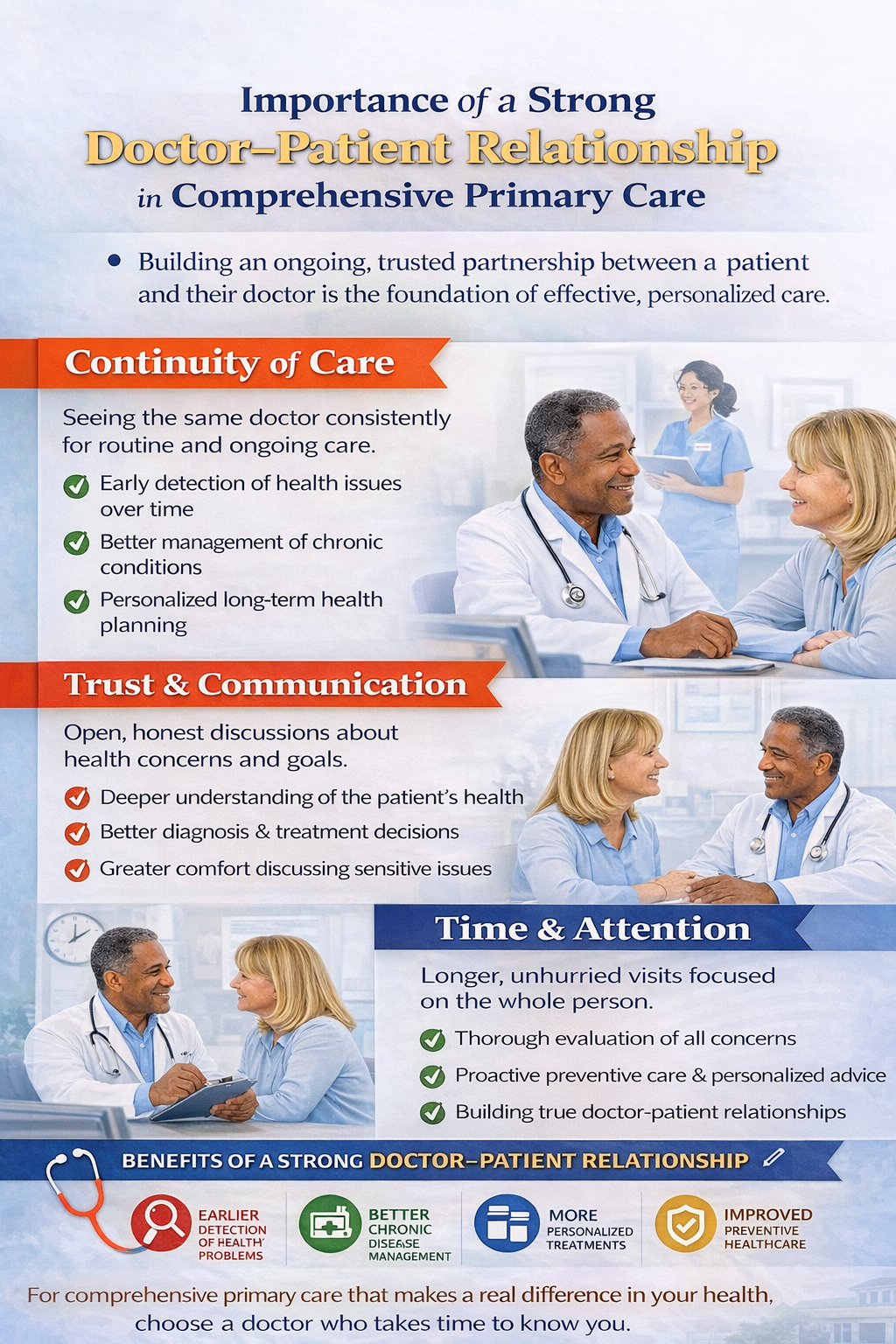
While many factors contribute to a strong relationship, three stand out as the most important: continuity, trust and communication, and adequate time during visits.
Each plays a unique role in making comprehensive primary care effective.
1. Continuity of Care
Continuity of care means seeing the same physician consistently over time. This allows the doctor to develop a deep understanding of the patient’s health patterns.
Why Continuity Matters
Medicine is rarely about a single moment in time. Health is a story that unfolds over years.
For example, consider a patient who has slightly elevated blood pressure. A one-time visit might not raise concern. But if the physician has followed the patient for several years, they may notice that blood pressure has slowly crept up from normal levels.
That subtle pattern can signal the early stages of hypertension.
Because the physician recognizes the trend early, they may recommend:
lifestyle adjustments
weight management
dietary changes
exercise improvements
These early steps may prevent the need for medication later.
Without continuity of care, this pattern might go unnoticed until the condition becomes more serious.
How Continuity Develops
Continuity happens through repeated interactions.
Patients return to the same physician for:
annual wellness visits
new health concerns
chronic disease management
preventive screenings
Over time, the physician builds a mental map of the patient’s health.
A Relatable Example
Consider a father who brings his child to the same physician for years. The doctor has watched the child grow from toddler to teenager.
When the child suddenly becomes withdrawn or develops sleep problems, the physician immediately notices the change. Because they know the child’s normal personality, they can recognize that something is different.
That awareness can lead to earlier conversations about stress, mental health, or school pressures.
This is the power of continuity.
2. Trust and Open Communication
Trust allows patients to speak openly about symptoms, habits, fears, and lifestyle factors that influence health.
Why Trust Matters
Many health problems involve sensitive topics.
Patients may hesitate to discuss issues such as:
weight gain
mental health struggles
alcohol use
sleep problems
relationship stress
Without trust, these concerns often go unspoken.
Yet these factors frequently play a major role in overall health. Learn more about Dr. Bass’s approach to care at Shreveport Direct Care.
The Role of Communication
When a patient trusts their physician, conversations become more open and honest.
For example, a patient may say:
“I know my cholesterol is high, but honestly my diet has been terrible lately because of work stress.”
That honest statement gives the physician valuable information. Instead of immediately prescribing medication, the doctor might explore:
stress management strategies
small dietary changes
realistic exercise goals
This approach reflects true whole person care.
An Example of Trust in Action
A middle-aged patient begins experiencing fatigue and poor sleep. At first, lab work appears normal.
Because the physician has built a trusting relationship with the patient over several years, the patient eventually shares that they are experiencing significant workplace stress and anxiety.
This information shifts the focus of care toward mental health support, stress management, and sleep strategies.
Without trust, that crucial information might never have surfaced.
3. Time and Attention During Visits
A meaningful doctor–patient relationship requires time.
When appointments are rushed, conversations become limited to the most urgent problem. Preventive care and deeper discussion are often pushed aside.
Why Time Matters
Health concerns are rarely simple.
A patient may come in for knee pain but also mention:
difficulty sleeping
recent weight gain
fatigue
rising blood pressure
Addressing these concerns thoughtfully requires time.
Physicians practicing comprehensive primary care aim to look beyond the immediate symptom and evaluate the broader picture.
The Process of a Thoughtful Visit
During a visit with adequate time, a physician might explore:
lifestyle habits
nutrition patterns
sleep quality
exercise routines
stress levels
This broader conversation often leads to better solutions.
Example
A patient complains of persistent headaches. Instead of simply prescribing medication, a physician with adequate time may discover:
the patient sleeps only five hours per night
they drink excessive caffeine
they are under significant work stress
Addressing these underlying factors may eliminate the headaches entirely.
This is the difference between symptom management and whole person care. At Shreveport Direct Care this extends to the different services we offer such as our comprehensive weight loss program, ADHD evaluations, and memory loss.
Practical Tips When Choosing a Doctor
Patients looking for a new physician can take several steps to identify practices that prioritize strong relationships.
Tip 1: Look for Consistency
Choose a clinic where you can see the same physician regularly.
Tip 2: Pay Attention to Communication
Notice whether the doctor listens carefully and encourages questions.
Tip 3: Ask About Appointment Structure
Practices that emphasize comprehensive primary care often allow longer visits.
Practical Steps to Build the Relationship
Once you find a physician, there are several ways to strengthen the partnership.
Schedule a preventive visit early
This allows the doctor to understand your baseline health.Share your full health history
Include family history, medications, and lifestyle factors.Return for follow-up care
Regular visits help build continuity.
Likely Outcomes of a Strong Doctor–Patient Relationship
Patients who invest in this relationship often experience several important outcomes:
earlier detection of health problems
better management of chronic disease
more personalized treatment plans
improved preventive care
greater confidence in healthcare decisions
Over time, the physician becomes not just a provider of treatment but a trusted advisor for long-term health.
Key Takeaway
The most important feature of comprehensive primary care is not technology, facilities, or even location. It is the strength of the doctor–patient relationship.
When patients and physicians develop trust, maintain continuity of care, and focus on whole person care, healthcare becomes more personal, more preventive, and more effective.
For anyone searching for a new physician, the question to ask is simple:
Does this practice make it possible to build a real relationship with my doctor?
If the answer is yes, you are far more likely to experience the true benefits of comprehensive primary care.
If You Are Looking For Comprehensive Primary care in Shreveport/ Bossier
For patients looking for comprehensive primary care in Shreveport/ Bossier, the most important factor is finding a physician who takes time to truly know you. At Shreveport Direct Care, care is built around a strong doctor–patient relationship, allowing patients to work closely with their physician over time. Instead of rushed visits and fragmented care, patients receive personalized attention, longer appointments, and direct communication with their doctor. This approach supports true whole person care, where prevention, lifestyle, mental health, and chronic disease management are all considered together.
By focusing on continuity of care, patients at Shreveport Direct Care can see the same physician consistently, helping build trust and a deeper understanding of their health history. For individuals and families searching for a primary care doctor in Shreveport, this relationship-centered model makes healthcare simpler, more personal, and more proactive. Over time, this partnership helps patients catch problems earlier, manage conditions more effectively, and stay focused on long-term health and wellness.
Please text or call Dr. Bass directly at 318-588-7060 for any questions about the Shreveport Direct Care membership or to set up a Meet & Greet. If you want to learn more about Dr. Bass you can see his post on why he opened Shreveport Direct Care.