

5 Steps to Finding a Concierge Doctor
At an event recently someone said “I am looking for a concierge doctor near me who answers texts, offers longer visits, fits my schedule and my philosophy of care- can you help me with a process to do this?”
Finding the right concierge physician starts with knowing where to look and which membership model matches your family’s needs and budget. These five practical steps show where to search, which keywords to use, and how to vet fees and services so you can choose with confidence.
Key takeaways
Start in the right places: Use concierge directories, Google, Healthgrades, DPC lists, and local employer or hospital referrals to build a shortlist.
Prioritize availability: Ask about same-day/next-day rates, appointment length, and preferred communication channels such as text or phone.
Compare membership costs and billing: note exact fees, billing cadence, and what the membership includes versus what will be billed to insurance.
Verify services and watch for red flags like evasive billing answers or refusal to provide a written agreement.
Run a meet-and-greet with a simple checklist to compare finalists objectively before you commit.
Step 1: start your search in the right places
Save time by beginning with specialty directories and trusted local channels. MDVIP and SignatureMD allow city or ZIP-code searches and display physician profiles, while DPC directories capture membership-based alternatives you might not find in standard concierge lists. Look for profiles that list fees, appointment lengths, and communication methods to make direct comparisons.
Use focused filters and add your city or ZIP code to each search so results are relevant. Scan profiles for the phrases same-day visits and extended appointments to prioritize practices that match your scheduling needs.
Concierge medicine
Retainer doctor
Personal physician program
Membership-based primary care
Direct primary care
You can add phrases like near me or your city or zip code to drill down more.
Don’t skip employer and community channels that can shortcut research. Ask human resources or your wellness committee about employer-sponsored memberships and check hospital referral lists for clinicians who work closely with specialists. Neighborhood groups on Facebook or Nextdoor often surface candid timing and responsiveness details that directories miss, so scan those for real-world feedback.
After you collect contacts, cut the list to three to five candidates and contact each clinic to confirm current fees, appointment lengths, and telehealth or texting options. That shortlist gives you a manageable set of practices to vet more deeply in the next steps.
Step 2: filter by availability and how they communicate
Availability and communication determine whether a concierge practice will fit your life. Ask for concrete metrics: percentage of same-day or next-day appointments, typical visit length, and average panel size so you understand how often you can see the clinician. Size matters! Practices that limit panels to under 600 patients generally offer faster access and longer visits than traditional panels that can exceed 1,500.
Map each clinic’s communication channels and expected response windows so follow-up works between visits. Confirm whether they use text, secure messaging, email, phone, and video visits and ask for typical response times for each channel. Test response time during your initial contact to validate any claims.
Clarify after-hours coverage, hospitalization policies, and urgent care coordination so you are not surprised when care needs escalate. Ask who covers members when the primary physician is on leave, whether the physician performs hospital rounds, and how the practice coordinates with emergency departments and specialists.
Step 3: compare membership costs and billing models
Document exact prices and billing cadence for each option because fees vary widely by model and location. Concierge memberships often range from about $2,000 to $10,000 per year, while smaller flat-fee DPC practices commonly charge under $1,500 annually. Keep a simple comparison table that lists price, billing frequency, and what each tier promises so you can weigh value against cost. At Shreveport Direct Care our membership costs are simple and based on where you want to receive care.
Get written details about what the membership covers and what will still be billed to insurance. Request a clear list that separates included services such as office visits, routine labs, telehealth, and care coordination from billable items like specialist visits, advanced imaging, and hospital stays. Confirm how membership fees interact with insurance programs like Medicare and whether fees are HSA or FSA eligible for your situation. Also consult practice documentation or specialist billing contacts for examples of past member billing scenarios.
Ask about tier descriptions, family pricing, and any employer or senior discounts before enrolling, and review cancellation, refund, and trial policies so you know your options. Higher tiers may include extras such as executive physicals, house calls, or specialist navigation; confirm the pricing and how often those add-ons are actually used by members.
Request sample agreements and written service lists—if the practice cannot produce those, treat it as a red flag. For a focused list of common inclusions, see Shreveport Direct Care’s overview of what is included in concierge medicine.
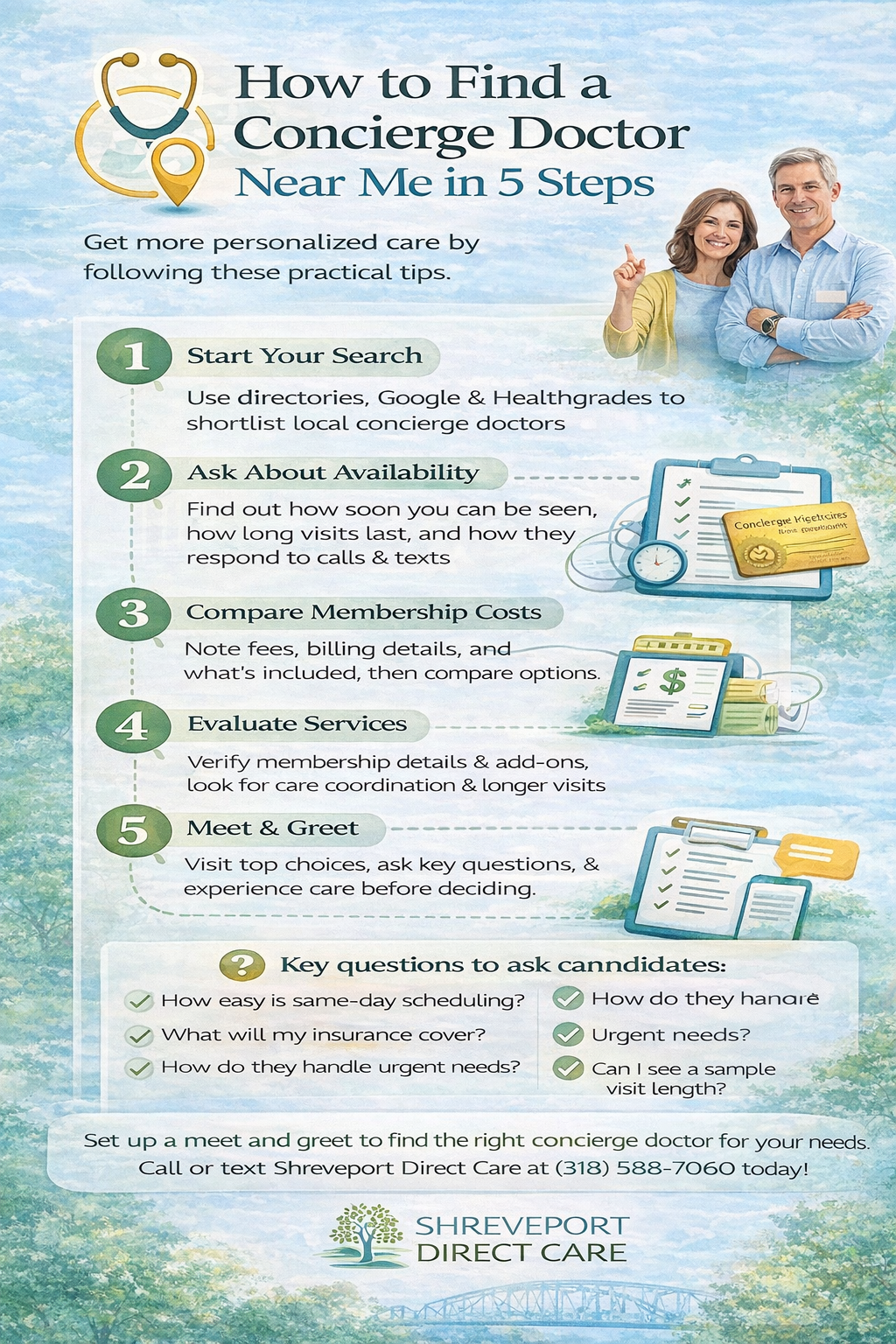
5 Steps to Find a Concierge MD
Step 4: evaluate services, add-ons, and red flags
Your shortlist should clearly describe core services that justify a membership: predictable access, longer visits, preventive planning, care coordination, and telehealth. Ask for measurable commitments—how long an annual review takes, how quickly the practice completes specialist referrals, and what follow-up looks like for complex cases. If staff cannot give specifics or avoid documentation, treat that as reason to pause before signing an agreement.
Same-day or next-day scheduling: quick access prevents small problems from becoming emergencies
Extended appointment times: longer visits let clinicians review records, explore causes, and make a concrete plan instead of offering a quick fix
Preventive planning and annual health roadmaps: look for written plans that outline what the practice will track and when
Care coordination with specialists and local hospitals to reduce duplicate tests and missed follow-up
Telehealth and secure messaging for timely follow-up between visits
Premium add-ons can be worth paying for when they match your needs and budget. Ask for sample scenarios and exact pricing for services such as executive physicals, in-office procedures, house calls, and travel medicine so you can evaluate real value rather than marketing claims. Request examples showing how an add-on saved time or prevented an unnecessary specialist visit.
Watch for red flags before you commit. Deal breakers include evasive answers about billing, refusal to provide a written membership agreement, high clinician turnover that breaks continuity, and consistently poor reviews about access; inability to verify response times is a strong warning sign.
Step 5: run a meet-and-greet and pick your provider
Bring a short checklist to each meet-and-greet so you compare clinics objectively and avoid choosing based on bedside manner alone. Ask about panel size, average wait for an appointment, visit length, response times for text or phone, membership inclusions, billing, cancellation policy, and how specialist referrals are handled. Pay attention to specificity and tone; clear, example-based answers indicate operational readiness and coordination rather than polished marketing.
Mark responses on your checklist so you can compare finalists side by side and use direct questions during the visit to test transparency and workflow. Send a couple of test messages or emails before you enroll to measure real-world response times and tone; those interactions often reveal whether a practice delivers on its promises.
What is your typical response time to a non-urgent message?
Which appointments are available same-day or next-day?
Which services does the membership cover versus what is billed to insurance?
How do you handle urgent issues after hours?
Can I see a sample membership agreement?
How do you coordinate with specialists and hospitals?
Create a simple scorecard with categories such as access, communication, transparency, services included, and rapport, then rank each finalist on a 1-to-5 scale. When you decide, request the written membership agreement, arrange payment, and ask the clinic to help transfer medical records. Schedule an extended initial visit that reviews current medications, preventive screening needs, and short-term health goals, and ask for a 90-day action plan so expectations are clear and measurable.
Find the right concierge doctor near you with confidence
Follow a focused plan: build a shortlist from directories and local referrals, verify availability and communication, compare membership costs in writing, and screen for clear, example-based commitments. Prioritize written agreements and consistent performance so your family or employees get predictable care rather than promises that sound good on a website.
For example, Shreveport Direct Care publishes clear pricing and same-day appointment options that illustrate the transparency you should expect from a membership practice. Check membership details for your top candidates, send test messages to measure response, and book a meet-and-greet so you and your family can experience extended visits and direct access before committing.
If you would like to setup a meet and greet with Shreveport Direct Care, call or text 318-588-7060.