
What Are the Early Warning Signs of Dementia?
What are early warning signs of dementia?
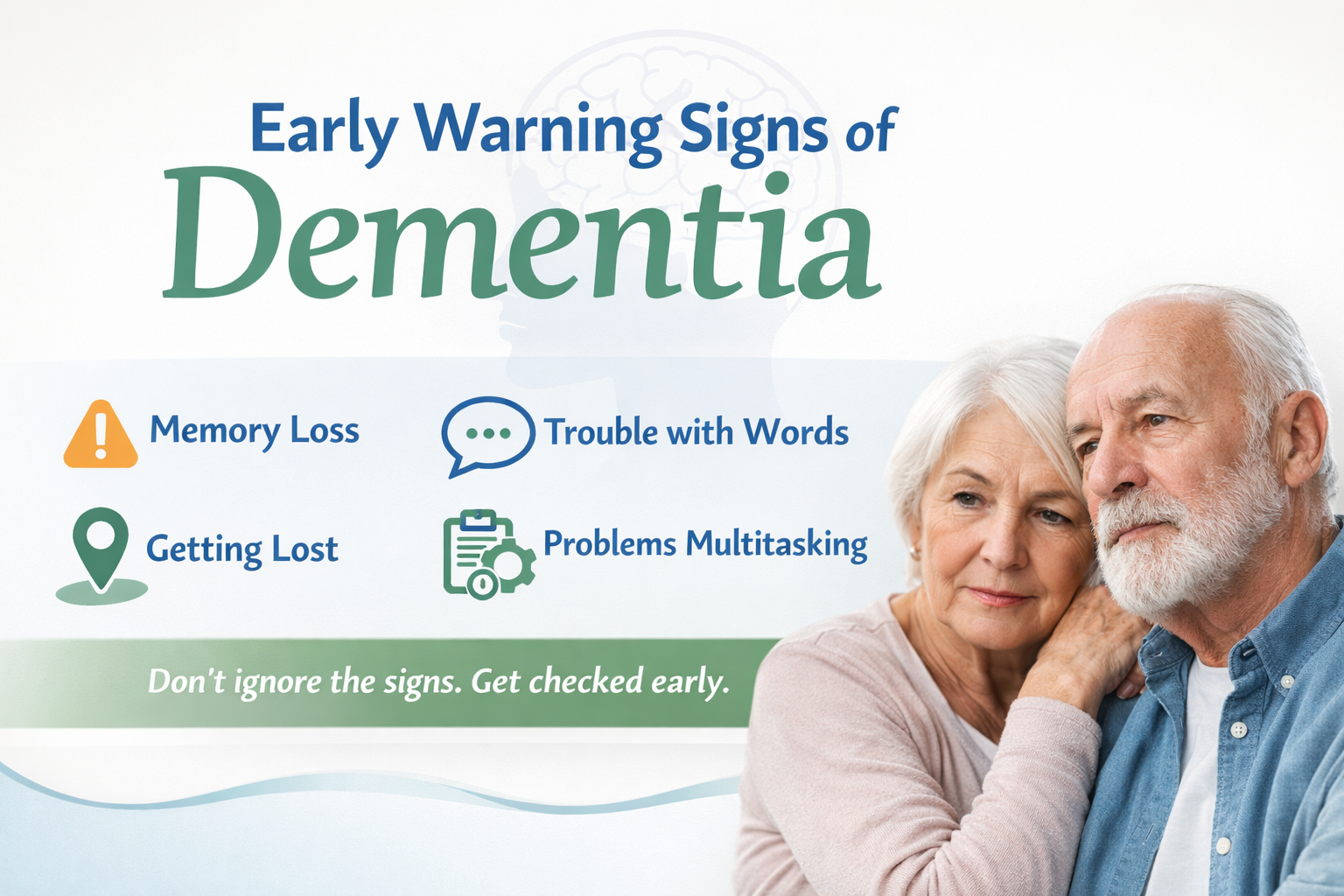
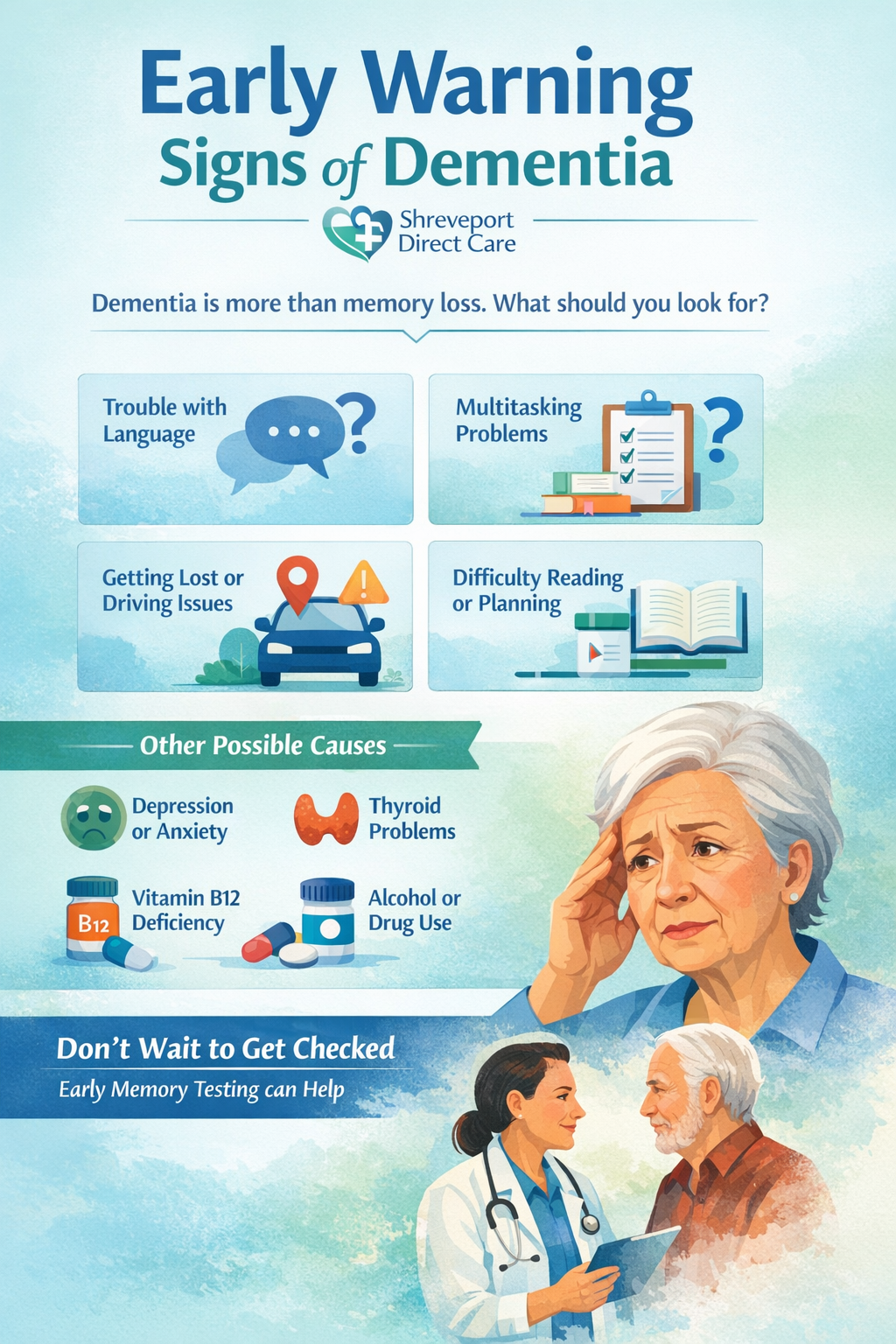
The early warning signs of dementia are often more than memory loss alone. Common early signs can include trouble finding words, difficulty multitasking, getting lost in familiar places, problems with reading or planning, and changes in driving. A person should get checked when these symptoms begin to affect daily life or seem to be getting worse over time.
As a physician, one of the most important lessons I have learned is that dementia is not just about memory loss. When patients or families come in worried about memory, I want to know the full story. Are there also problems with language, multitasking, reading, driving, or getting lost? Are symptoms getting worse? Could something treatable be causing the change?
That is why a careful history matters. Some people do have early signs of dementia. Others may have depression, anxiety, thyroid disease, vitamin deficiencies, or other medical problems that can look similar. In this post, I will explain the early warning signs of dementia, what concerns me most in practice, and why getting checked early can make a real difference.
Do I Have Early Warning Signs of Dementia?
Many people worry about memory as they get older.
They may forget a name. Misplace their keys. Walk into a room and forget why they went there.
That can be frustrating. It can also be scary.
But not every memory slip means dementia.
As a physician, I think one of the most important parts of this conversation is slowing down and taking a careful history. That takes time. It is not enough to ask, “Are you forgetting things?” and stop there. If you want to know whether a person may be showing early warning signs of dementia, you have to understand the full picture.
You have to ask what is happening, when it started, whether it is getting worse, and which areas of thinking are being affected.
That matters because true dementia usually affects more than one cognitive area. It is not always just memory.
Dementia Is More Than Forgetfulness
When people think about dementia, they usually think about memory loss.
Memory is important, but it is only one part of brain function.
When I evaluate someone for possible dementia, I am also paying close attention to other areas, including language, visual-spatial skills, and executive function. Executive function includes things like planning, organizing, problem-solving, and multitasking.
This is where many early warning signs show up.
For example, a person who once handled many tasks at once may suddenly struggle to keep up with basic planning. Someone who used to manage a household, pay bills, and juggle appointments may now seem overwhelmed by simple steps. That is more concerning than occasionally forgetting where they put their phone.
If a patient used to multitask well and now cannot, and there is no clear reason like stress, anxiety, poor sleep, or another health problem, I take that seriously.
Early Warning Signs That Concern Me Most
There are certain symptoms that make me more concerned that this may be more than normal aging.
One major red flag is when there is a problem in addition to memory.
This may include:
Trouble finding the right words
Trouble understanding language
Difficulty reading when the person used to read often
Problems with direction or getting lost
Trouble judging space or distance
Difficulty multitasking or following steps
New problems with driving
Driving changes can be especially important. If someone has a banged-up car, has had a recent accident, or is getting confused on familiar roads, that raises concern. Driving requires memory, judgment, attention, visual-spatial skills, and quick decision-making. Problems there can be an early sign that something deeper is going on.
I also think it is very important to ask about reading.
People who used to read a lot will sometimes stop reading. Families may not always notice this at first. The person may not complain much about it. But if someone once enjoyed books, magazines, or the newspaper and now avoids reading, that can be a clue that language or attention is changing.
Another warning sign is trouble navigating familiar places.
That may sound like not being able to find the way home. It may also be something smaller, like getting confused in a familiar store or not being able to find the bathroom at night in their own home. These symptoms matter.
What Is Normal Aging and What Is Not?
Normal aging can cause some slowing.
A person may need a little more time to recall a name. They may be more forgetful when under stress. They may sleep poorly and feel mentally foggy the next day.
That is different from losing function.
What worries me is when brain changes begin to interfere with daily life.
That may look like:
Missing important appointments again and again
Trouble managing finances
Getting lost in familiar places
Difficulty following a recipe or routine task
Needing more help with things they used to do alone
Trouble keeping up in conversations
Changes in judgment or decision-making
The key question is not just, “Are you forgetting things?”
The key question is, “Is this affecting how you live?”
Why a Careful History Matters
In my view, one of the biggest mistakes people make is rushing this evaluation.
You cannot understand memory changes in five rushed minutes.
A good evaluation starts with listening. It means asking the patient what they have noticed. It also means asking the family what they have noticed, because sometimes loved ones see things the patient does not.
A careful history helps answer important questions:
Did this come on slowly or suddenly?
Is it getting worse?
Is it mostly memory, or are other thinking skills changing too?
Could stress, grief, poor sleep, depression, anxiety, alcohol, or medication be playing a role?
Without those answers, it is too easy to either overreact or miss something important.
Problems That Can Look Like Dementia
Another point I feel strongly about is this: not every person with memory symptoms has dementia.
There are a number of treatable conditions that can mimic dementia, and these can be missed if the evaluation is not thorough.
Some of the more common ones include depression and anxiety. In fact, these are some of the most common reversible causes I see in practice.
A major life event can deeply affect the brain and body. Grief, loneliness, retirement, loss of independence, illness in a spouse, or other major stress can trigger depression or anxiety that becomes severe and debilitating. A person may seem withdrawn, forgetful, slow, and mentally checked out. Families may fear major decline. But in some cases, the real issue is untreated depression or anxiety causing what looks like dementia.
I have seen this many times.
The person and family may be terrified that they are watching the beginning of severe cognitive decline. But when we step back, ask the right questions, and evaluate carefully, the picture is different. The symptoms may be coming from mood, stress, and poor function rather than a true degenerative dementia.
That does not mean the symptoms are not serious. They are. But it does mean there may be a treatable explanation.
Hypothyroidism is another important example. Especially in older adults, thyroid problems may not cause obvious symptoms early on. Over time, people may develop fatigue, slowing, memory trouble, and other changes that look like dementia. If thyroid function is not checked, this can be missed. When treated, some patients improve.
I also think about nutritional problems such as vitamin B12 deficiency. Substance use can play a role as well. Less common but very important causes include brain tumors and conditions like hydrocephalus.
This is why memory changes should not be ignored, but they also should not be labeled too quickly.
What are early warning signs of dementia?
Real Lessons From Practice
In real life, the most common reversible dementia-like cases I see are tied to depression and anxiety after major life changes.
These patients can look very impaired.
They may stop engaging. They may lose motivation. They may struggle to think clearly. They may forget things. Loved ones may say, “This came on so fast,” or “I think something is terribly wrong.”
Sometimes something is terribly wrong. But it is not always dementia.
Sometimes it is severe emotional suffering that has gone untreated.
That lesson matters because it gives patients and families hope. It reminds us to stay thoughtful. It reminds us to look deeper.
The same is true with thyroid disease. A patient may seem mentally slower over time, but unless someone checks the thyroid, the cause may be missed. That is why a proper evaluation matters so much.
Why I Believe Early Testing Matters
If you are worried about your memory, you need to have it checked.
I feel strongly about that.
There is an old saying in business: what cannot be measured cannot be changed. I think that idea applies here too.
In my opinion, memory testing should begin much earlier than most people think. I personally recommend memory testing beginning in the late 40s or early 50s. The reason is simple: if you do not measure memory until there is obvious decline, you may already be late.
I commonly see older adults in practice whose family thought they were fine, until suddenly they were not. One day everyone thinks things are normal. The next day we are doing memory testing because the decline has become too clear to ignore.
But in many cases, those changes did not happen overnight.
They were likely building slowly over time.
My belief is that if we had begun testing years earlier, we may have seen subtle changes sooner. That may have created a chance to look for causes, address risk factors, monitor trends, and plan earlier.
Early testing gives context.
It helps us know where someone started. It helps us spot change. And it gives patients and families a better chance to act before problems become more severe.
What Patients and Families Should Do
Do not ignore warning signs.
Do not assume it is “just aging.”
Do not wait until there is a crisis, a car accident, or a major decline in daily function.
If you or someone you love is showing possible early warning signs of dementia, get evaluated.
That includes signs like:
Memory loss that is getting worse
Trouble with words or conversation
Difficulty multitasking
Getting lost
Changes in driving
Trouble reading
Problems handling familiar daily tasks
The earlier you check, the better.
That does not mean every person will have dementia. In fact, some will not. But the only way to know is to take the symptoms seriously and look carefully.
Final Thoughts on the Early Warning Signs of Dementia
The early warning signs of dementia are often more than memory loss alone.
What concerns me most is when memory changes are joined by trouble with language, multitasking, reading, navigation, visual-spatial function, or driving. These are the signs that tell me we need to look closer.
Just as important, some problems that look like dementia may actually be treatable. Depression, anxiety, hypothyroidism, vitamin deficiencies, substance use, and other medical conditions can all play a role.
That is why this evaluation should never be rushed.
It should be thoughtful. It should be thorough. And it should happen early.
If you are worried about your memory or a loved one’s memory, get it checked. Measuring memory early may give you the chance to spot change sooner, find answers, and take steps while there is still more you can do.
FAQ Section
What are the early warning signs of dementia?
Early warning signs of dementia may include more than memory loss. A person may also have trouble finding words, following steps, multitasking, reading, driving, or finding their way in familiar places. The biggest concern is when these changes begin to affect daily life.
Is forgetfulness always a sign of dementia?
No. Forgetfulness can happen with normal aging, stress, poor sleep, anxiety, or depression. Dementia becomes more concerning when memory problems get worse over time and are joined by trouble in other thinking areas.
What is the difference between normal aging and dementia?
Normal aging may cause mild forgetfulness, like misplacing items or needing more time to remember a name. Dementia is more serious because it affects day-to-day function. A person may struggle with finances, driving, conversations, routines, or getting around familiar places.
Can depression or anxiety look like dementia?
Yes. Depression and anxiety can sometimes cause memory problems, poor focus, low motivation, and slowed thinking. In some cases, these symptoms may look like dementia, which is why a careful evaluation is so important.
What medical problems can mimic dementia?
Several medical conditions can mimic dementia. These include hypothyroidism, vitamin B12 deficiency, drug or alcohol use, brain tumors, hydrocephalus, depression, and anxiety. Some of these causes may improve with treatment.
When should someone get checked for memory problems?
A person should get checked if memory or thinking changes are becoming more noticeable, are getting worse, or are affecting daily life. Warning signs like getting lost, trouble driving, word-finding problems, or difficulty multitasking should not be ignored.
Why is early memory testing important?
Early memory testing can help create a baseline. This makes it easier to notice slow changes over time. It may also help identify problems earlier, when there may be more opportunity to treat reversible causes or plan next steps.
Does trouble driving count as an early warning sign of dementia?
It can. Driving requires memory, attention, judgment, and visual-spatial skills. New driving problems, recent accidents, or getting confused on familiar roads can be important warning signs.