
How Does Concierge Medicine Work With Insurance? And How Is It Different From Direct Primary Care?

How does concierge medicine work with insurance?
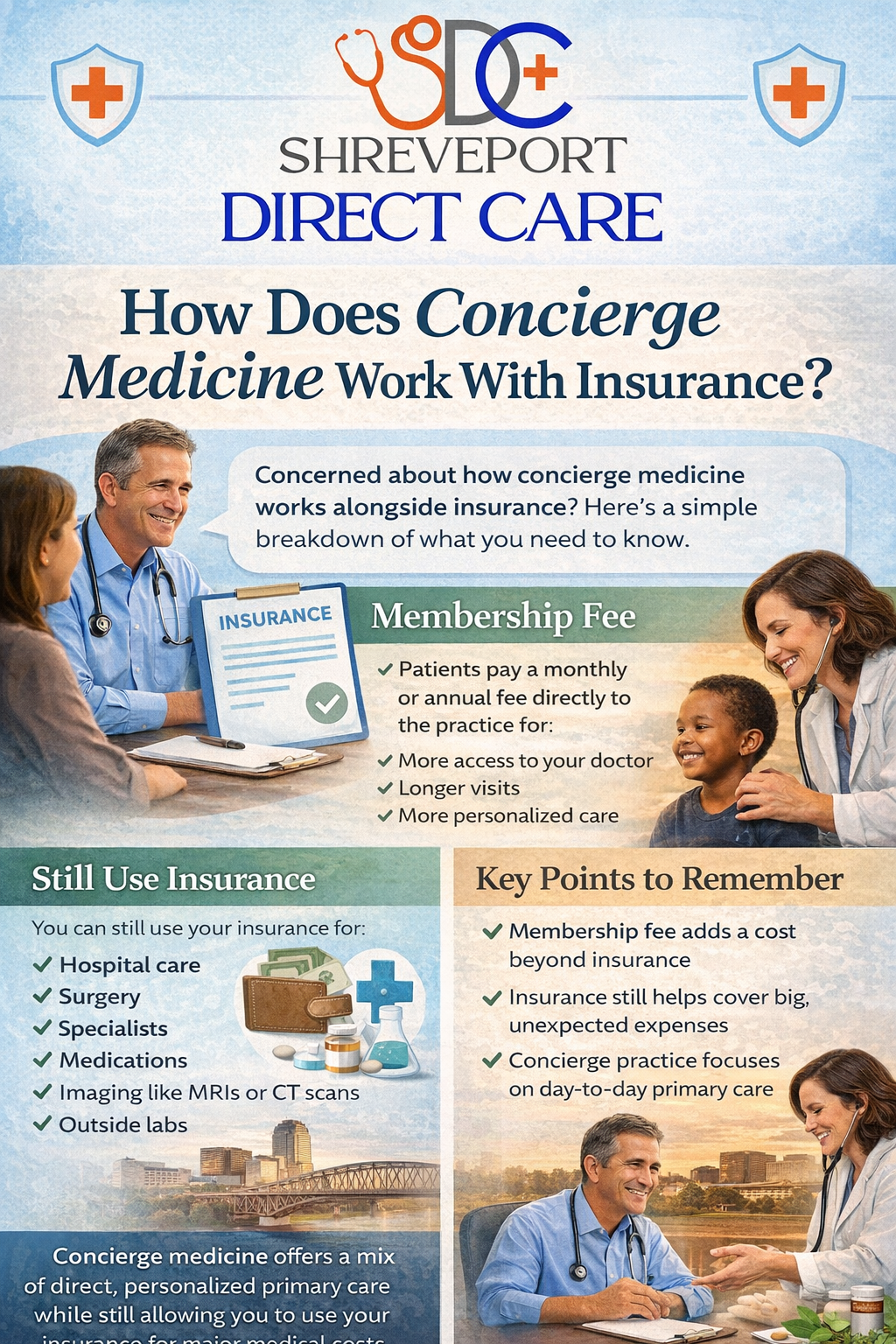
How does concierge medicine work with insurance? In most cases, concierge medicine works alongside insurance, not instead of it. Patients usually pay a membership or retainer fee directly to the practice for better access, longer visits, and more personalized care. They can still use insurance for things like emergency room visits, hospital care, surgery, specialist visits, imaging, medications, and outside lab work. Direct primary care is similar because patients also pay the practice directly, but many direct primary care clinics do not bill insurance for routine primary care visits. In both models, the key is understanding what the membership includes, what insurance still covers, and what costs you may still have to pay yourself.
When patients ask me this question, the biggest misunderstanding is usually not how insurance works. It is whether they can afford this kind of care at all. Many people also think that if they join a membership-based practice, they can no longer use their insurance anywhere else. That is usually not true. The better question is this: what are you paying for, what risks are you still carrying, and what kind of relationship do you want with your doctor?
Many patients today feel stuck. They are paying a lot for health insurance, but they still have trouble getting in to see their doctor. They may wait weeks for an appointment, feel rushed during the visit, and leave with more questions than answers.
That is why more people are asking about concierge medicine and direct primary care. They want to know if these models are worth it, how they work with insurance, and whether they are only for wealthy patients. These are fair questions.
As a doctor, I have found that most people are not looking for something fancy. They are looking for something that should not be rare in healthcare: enough time with their doctor, easier access, clear answers, and a relationship built on trust. If you are looking for primary care in Shreveport, it helps to understand the difference between concierge medicine, direct primary care, and traditional insurance-based care before you decide what fits your needs.
How Does Concierge Medicine Work With Insurance?
Concierge medicine usually involves a membership fee paid directly to the practice. That fee often helps cover better access to your doctor, longer visits, more personal attention, and easier communication.
In many concierge practices, the doctor may still bill your insurance for covered office visits or medical services. That means the membership fee does not replace your insurance. It is often an added cost for a different kind of primary care experience.
You may still use your insurance for:
emergency room visits
hospital care
specialist visits
surgery
imaging like CT scans or MRIs
medications
outside lab work
This is where many people get confused. They hear “membership” and think one of two things. First, they think it must be too expensive. Second, they think they will no longer be able to use their insurance for anything else. In reality, concierge medicine often works beside insurance, not against it.
I usually explain it this way: health insurance is still important for large and unexpected costs. The membership is about your day-to-day access to your primary care doctor. It is a different way of paying for the relationship and access that many patients feel is missing in traditional care.
So when you ask, “How does concierge medicine work with insurance?” the simple answer is this: you are often paying directly for better primary care access while still keeping insurance for major medical expenses and outside services.
Concierge Medicine vs Direct Primary Care: What Is the Difference?
This is an important part of the conversation, especially because Shreveport Direct Care is a membership-based primary care clinic in Shreveport, Louisiana.
Concierge medicine and direct primary care do have some things in common. In both models, patients pay the practice directly. In both models, patients often get more time with their doctor, easier communication, and a more personal experience.
But they are not exactly the same.
Concierge medicine
Concierge medicine usually charges a membership or retainer fee. In many cases, the practice may also bill insurance for covered visits and services. This means patients may have both a direct membership cost and regular insurance use within the same practice.
Direct primary care
Direct primary care, often called DPC, also uses a membership fee. But many DPC practices do not bill insurance for routine primary care visits. Instead, the membership is designed to cover the core primary care relationship directly. This often makes pricing simpler and easier to understand.
That is one reason many patients like DPC. It removes a lot of the middle steps that come with insurance billing for routine office care. The focus shifts back to the doctor-patient relationship.
A simple way to think about it is this:
Concierge medicine: membership fee plus insurance may still be billed for routine care
Direct primary care: membership fee with routine primary care often handled outside insurance
Insurance: still useful for major medical costs outside the clinic
Neither concierge medicine nor direct primary care is the same as health insurance. Both are care models. Insurance is still a separate tool for protecting you from bigger medical expenses.
This matters because many people looking for a doctor in Shreveport are not just choosing a clinic. They are choosing a system. They want to know whether they are entering another confusing healthcare arrangement or finally finding something more simple and personal.
Why This Matters for Real Patients
For many people, the real question is not just cost. It is value.
Patients often tell me they are already paying a lot for health insurance. Yet they cannot get quick answers. They cannot get enough time with their doctor. They feel rushed. They feel unheard. They feel like their visit ends before the real conversation even begins.
That is why concierge medicine and direct primary care can feel appealing.
What patients often value most is not something complicated. It is:
longer visits
same-day or next-day access
texting or calling their doctor
fewer rushed decisions
more thoughtful care
stronger focus on prevention
In my experience, once patients understand how membership care and insurance work together, they start to see the difference more clearly. They are not paying for “luxury.” They are paying for access, time, and a better relationship with their doctor.
They also appreciate that good primary care is not just about writing a prescription fast or ordering a test right away. Many patients value having a doctor who takes time to listen, ask the right questions, and think through the problem before jumping to medication, imaging, or a referral.
This can be especially helpful for:
families
small business owners
people with high deductibles
Medicare patients
people frustrated with traditional primary care
adults looking for preventive care
patients seeking weight loss care in Shreveport
parents wanting more connected family medicine in Shreveport
Real-life example
One patient may keep health insurance for major medical needs like the ER, hospital care, and surgery, but join a membership-based practice because they want faster access, longer visits, and better follow-up. Another family may keep insurance for large unexpected events, but rely on their membership-based doctor for routine care, preventive care, and quick help when new problems come up.
That is often where the model makes the most sense. Insurance protects against big risk. Membership care improves the everyday care experience.
Who Should Think Carefully About Insurance, Membership Costs, and Risk?
This type of care can be a very good fit for many people, but it still requires some thought.
Patients should understand that even with concierge medicine or direct primary care, they may still have direct costs. The membership does not make every other medical expense disappear. You still need to think about your budget, your insurance, your deductible, and your own comfort with out-of-pocket risk.
I usually tell patients that if they can afford to keep health insurance, it is wise to do so. Insurance still matters for:
car accidents
emergency room visits
hospital stays
surgeries
specialist care
major unexpected illness
That said, patients can often still use insurance for labs, imaging, specialists, medications, and hospital-based care. Some practices may also help patients find lower cash prices for certain services. In some cases, that can reduce costs and give patients more options.
The most important thing is to ask clear questions before joining any practice:
What does the membership include?
Do you bill insurance for office visits?
Can I still use my insurance for labs, imaging, and specialists?
What costs will I still be responsible for?
Is this a good fit for my health needs and budget?
This is really about understanding your own risk and choosing the care model that fits your life. If you want easier access, more time, and a better relationship with your doctor, a membership model may be worth exploring. If you are searching for family medicine in Shreveport or a more personal primary care experience, asking these questions can help you make a smart decision.
What Should You Do Next?
If you have been wondering whether concierge medicine or direct primary care is right for you, start by thinking about your biggest frustration with your current care.
Is it hard to get an appointment? Do visits feel rushed? Do you want a doctor who knows you better? Do you want easier communication and more thoughtful care?
Then ask how the practice works, what the membership includes, and how insurance fits into the picture.
The right model is not the one with the fanciest name. It is the one that gives you the kind of care you actually want and need.
At Shreveport Direct Care, we believe healthcare should feel simpler, more personal, and easier to access. If you have questions about membership-based primary care in Shreveport, call or text 318-588-7060 or email info@shreveportdirectcare.com. We are happy to help you understand your options and decide what may fit you and your family best.
FAQs About Concierge Medicine and Insurance
Do I still need health insurance if I join concierge medicine?
Yes, if you can afford it. Health insurance is still important for big medical costs like hospital care, emergency room visits, surgery, and unexpected illness or injury.
Can I still use insurance if I join a membership-based practice?
Yes. In most cases, you can still use insurance for services outside the membership, such as specialists, imaging, hospital care, medications, and outside lab work.
Is concierge medicine the same as direct primary care?
No. Both use direct payment from the patient, but concierge medicine often works alongside insurance and may bill insurance for routine care. Direct primary care often does not bill insurance for routine primary care visits.
Why do people think they cannot afford concierge medicine or direct primary care?
Many people assume these models are only for wealthy patients. But some patients find the cost worth it because they get better access, longer visits, and a less rushed care experience.
Does a membership replace my deductible or other out-of-pocket costs?
No. A membership does not replace your insurance plan. You may still have out-of-pocket costs for medical services outside the practice.
Who may benefit most from this type of care?
Families, small business owners, people with high deductibles, Medicare patients, and people frustrated with rushed traditional care may all benefit, depending on their health needs, priorities, and budget.