
What Is Alzheimer’s Disease?
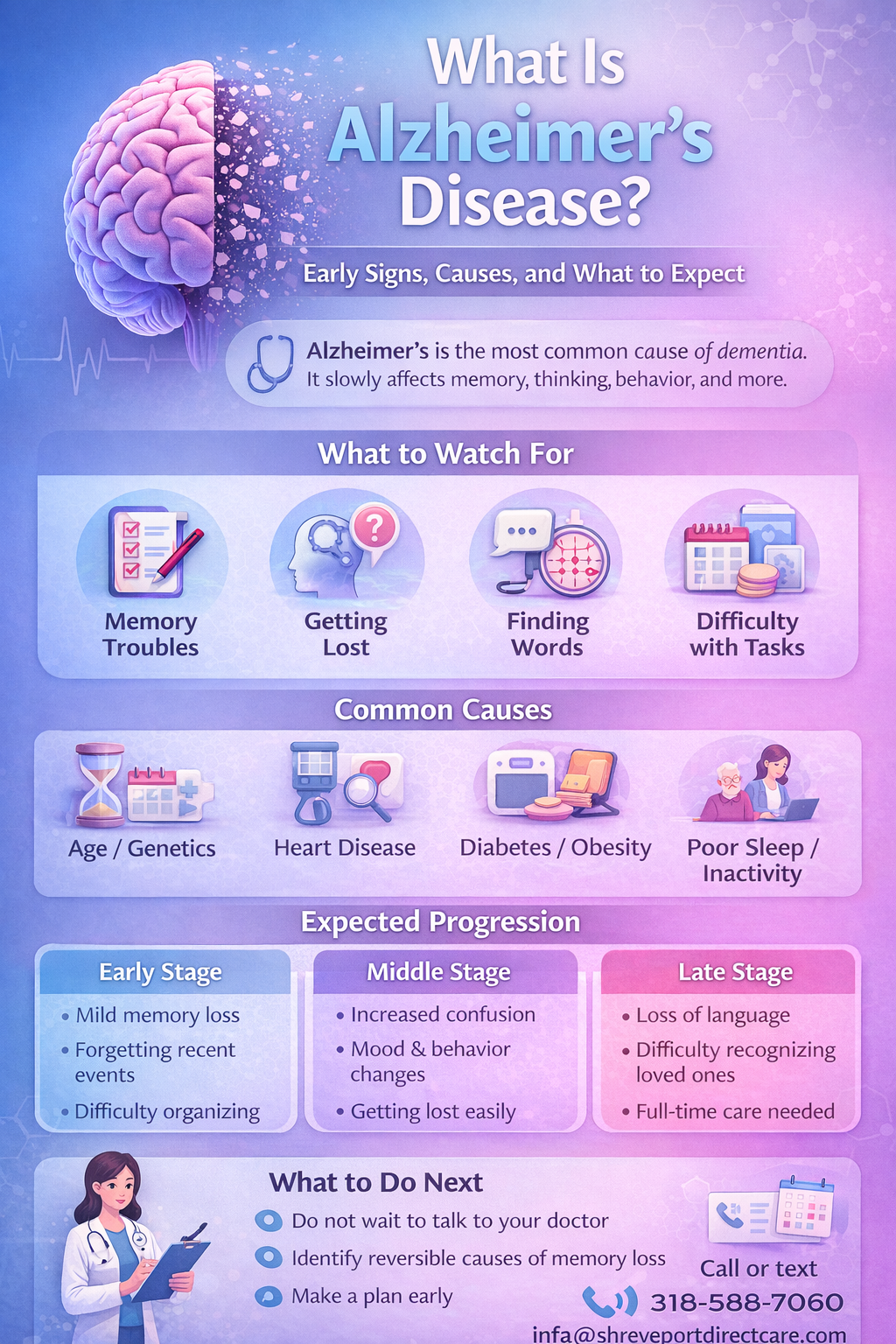
Alzheimer’s disease is a brain disorder that slowly affects memory, thinking, behavior, and daily function. It is the most common cause of dementia. Early signs may include worsening memory, repeating questions, trouble finding words, getting lost, and difficulty managing everyday tasks. Over time, symptoms progress and can affect independence. While there is no cure, early evaluation can help identify the cause of symptoms, rule out treatable conditions, and create a plan to support long-term brain health.
What Is Alzheimer’s Disease?
Alzheimer’s disease is a condition that affects the brain over time. It causes problems with memory, thinking, and the ability to carry out daily activities.
It is the most common cause of dementia, which is a general term for changes in memory and thinking that affect daily life.¹
In the early stages, people may notice small changes. They may forget recent conversations, repeat questions, or have trouble finding the right words. As the disease progresses, these problems become more noticeable and begin to affect independence.¹
Why Alzheimer’s Disease Matters More Than People Realize
Many people assume memory problems are just part of getting older. In some cases, that is true. Mild forgetfulness can be normal.
But Alzheimer’s disease is different.
It affects more than memory. It can impact:
Language (trouble finding words)
Thinking and decision-making
Ability to plan or follow steps
Awareness of surroundings
Behavior and mood¹
Over time, it can make everyday tasks like managing money, cooking, driving, or even recognizing loved ones more difficult.¹
That is why it is important not to ignore early changes.
How I Evaluate Memory Concerns in My Practice
In my practice in Shreveport, I take a different approach than most clinics.
The first step is simple: I listen.
Visits are usually 60 to 90 minutes. This gives us time to understand what is really going on. I ask detailed questions about memory, thinking, sleep, mood, and daily function.
I often encourage patients to bring a family member or friend. They can help provide important details and notice changes the patient may not see.
One of the biggest differences in my approach is that I do not focus on memory alone. I look at multiple areas of thinking, including:
Language
Attention
Multitasking
Visual and spatial awareness²
This helps us understand how serious the problem is and what might be causing it.
Many patients tell me this is the first time they feel truly listened to and understood.
When You Should Be Concerned About Alzheimer’s Disease
Not all memory problems mean Alzheimer’s. But some signs should not be ignored.
You should consider getting evaluated if you notice:
Memory loss that is getting worse
Repeating the same questions
Trouble finding words
Difficulty managing tasks like bills or medications
Getting lost in familiar places
Changes in judgment or decision-making²
I also pay close attention when patients have problems beyond memory. For example, someone who used to multitask easily but now struggles without a clear reason is more concerning.
Changes in driving, reading habits, or getting lost at night can also be early warning signs.²
Not All Memory Loss Is Alzheimer’s
This is one of the most important points.
Many conditions can look like Alzheimer’s disease but are actually treatable.
Common causes include:
Depression or anxiety
Poor sleep
Thyroid problems
Vitamin deficiencies (like B12)
Medication side effects
Alcohol use³
For example, I have seen patients who were worried about serious brain disease, but their symptoms were caused by a thyroid problem that improved with treatment.
This is why a careful evaluation matters.
What Is Alzheimer’s Disease?
What You Can Do to Protect Your Brain
There is no guaranteed way to prevent Alzheimer’s disease. But there are steps you can take to support brain health.
Research suggests that healthy habits may help lower risk or delay decline, including:
Regular physical activity
Good sleep
Healthy weight
Managing blood pressure and diabetes
Staying mentally and socially active⁴
In my practice, I focus on these areas as part of a larger plan for longevity and overall health. The same habits that help with weight loss and long-term health also support brain health.
What to Do Next
If you are worried about memory loss, do not wait.
One of the biggest mistakes I see is assuming it is “just aging” or being too afraid to get checked.
Early evaluation allows us to:
Identify treatable causes
Establish a baseline
Track changes over time
Create a clear plan²
There is a saying: what cannot be measured cannot be improved.
I often recommend baseline memory testing in your 40s or early 50s so we can detect changes early, not after a sudden decline.
If you are worried about Alzheimer’s Disease or memory problems…
If you are concerned about your memory or a loved one’s memory, take the first step.
At Shreveport Direct Care, we offer longer visits, thoughtful evaluations, and a personalized approach to your health.
📞 Call or text: 318-588-7060
📧 Email: info@shreveportdirectcare.com
Schedule a visit today and get clear answers about your memory and your health.
FAQs
What is Alzheimer’s disease?
Alzheimer’s disease is a brain disorder that affects memory, thinking, and daily function over time.
Is Alzheimer’s the same as dementia?
No. Dementia is a general term, and Alzheimer’s is the most common type.
What are early signs of Alzheimer’s disease?
Early signs include memory loss, repeating questions, trouble finding words, and difficulty with daily tasks.
Can memory loss be reversed?
Some causes of memory loss, such as depression or thyroid problems, can be treated and improved.
When should I see a doctor about memory loss?
You should be evaluated if symptoms are getting worse or affecting daily life.
Can lifestyle changes help prevent Alzheimer’s?
Healthy habits like exercise, sleep, and managing chronic conditions may help reduce risk.
References
National Institute on Aging. What Is Alzheimer’s Disease?
https://www.nia.nih.gov/health/alzheimers-disease/what-alzheimers-diseaseAlzheimer’s Association. 10 Early Signs and Symptoms of Alzheimer’s
https://www.alz.org/alzheimers-dementia/10_signsNational Institute on Aging. Memory, Forgetfulness, and Aging: What’s Normal and What’s Not?
https://www.nia.nih.gov/health/memory-loss-and-forgetfulnessNational Institute on Aging. What Do We Know About Preventing Alzheimer’s Disease?
https://www.nia.nih.gov/health/preventing-alzheimers-disease