
How to Know If You Have a Vitamin Deficiency (Not Guess)
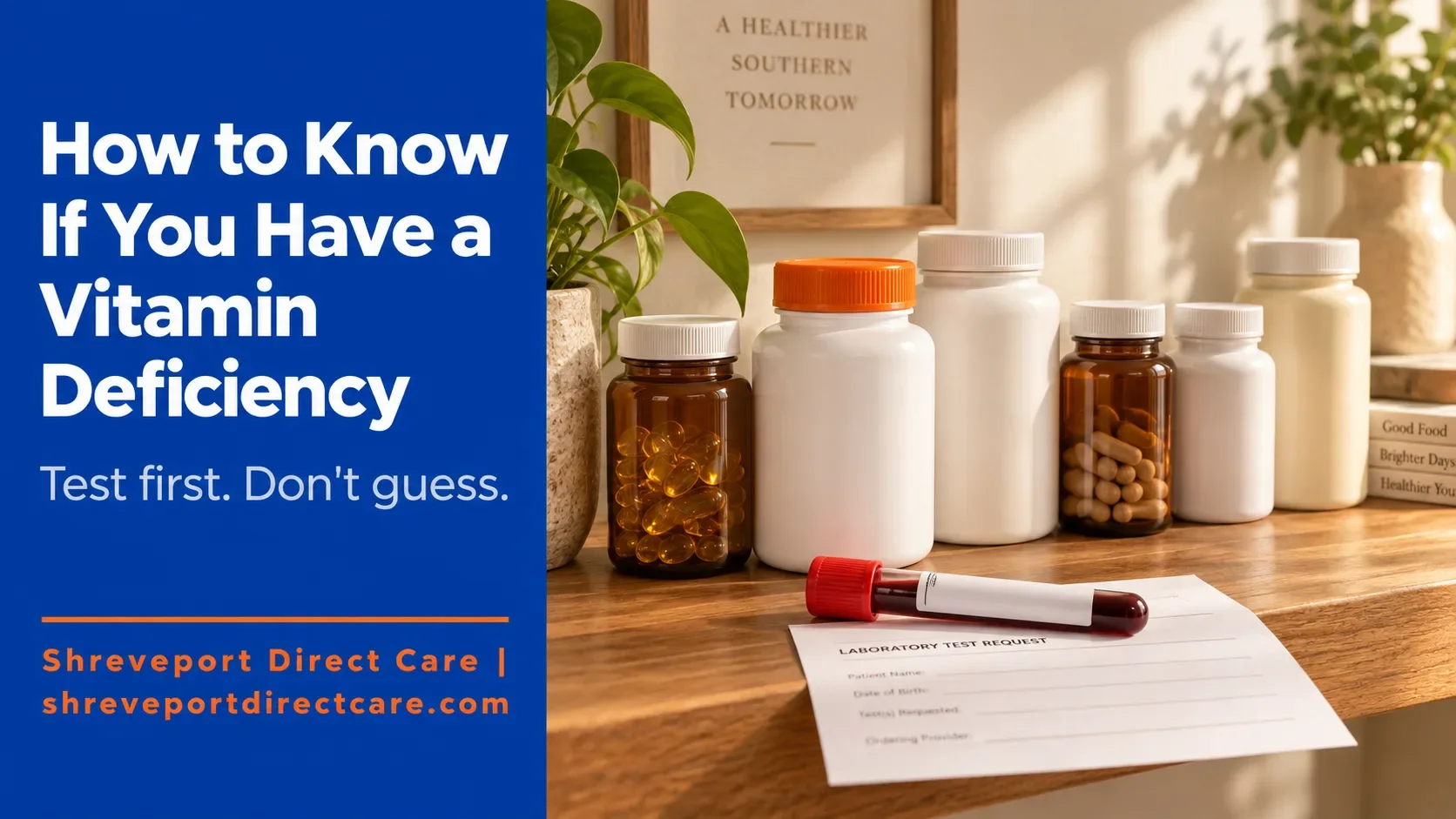
The only reliable way to know if you have a vitamin deficiency is a blood test, not a symptom checklist or a supplement label. That matters more than it sounds. Brain health supplements are often sold as one-size-fits-all stacks, but the research on nutrients like B12 and vitamin D only shows a benefit in people who are actually deficient. Taking them without knowing your levels means you might be paying for nothing, or in some cases, taking more than your body can safely handle.
The One-Size-Fits-All Stack Doesn't Work
A lot of "brain health" supplement stacks are built around the idea that everyone benefits from the same combination of nutrients. That's not how nutrient physiology works. If your vitamin D and B12 levels are already normal, adding more won't sharpen your memory further. The research consistently shows the benefit shows up in people correcting an actual gap, not in people who are already sufficient.
This is worth saying plainly because it cuts against how these products are marketed. A stack sold as "everything your brain needs" assumes everyone's brain needs the same things in the same amounts. In reality, your nutrient status depends on your diet, your medications, your age, and your health history. A 58-year-old on metformin has a very different B12 risk profile than someone with no chronic conditions eating a varied diet.
What a Real Vitamin Deficiency Test Involves
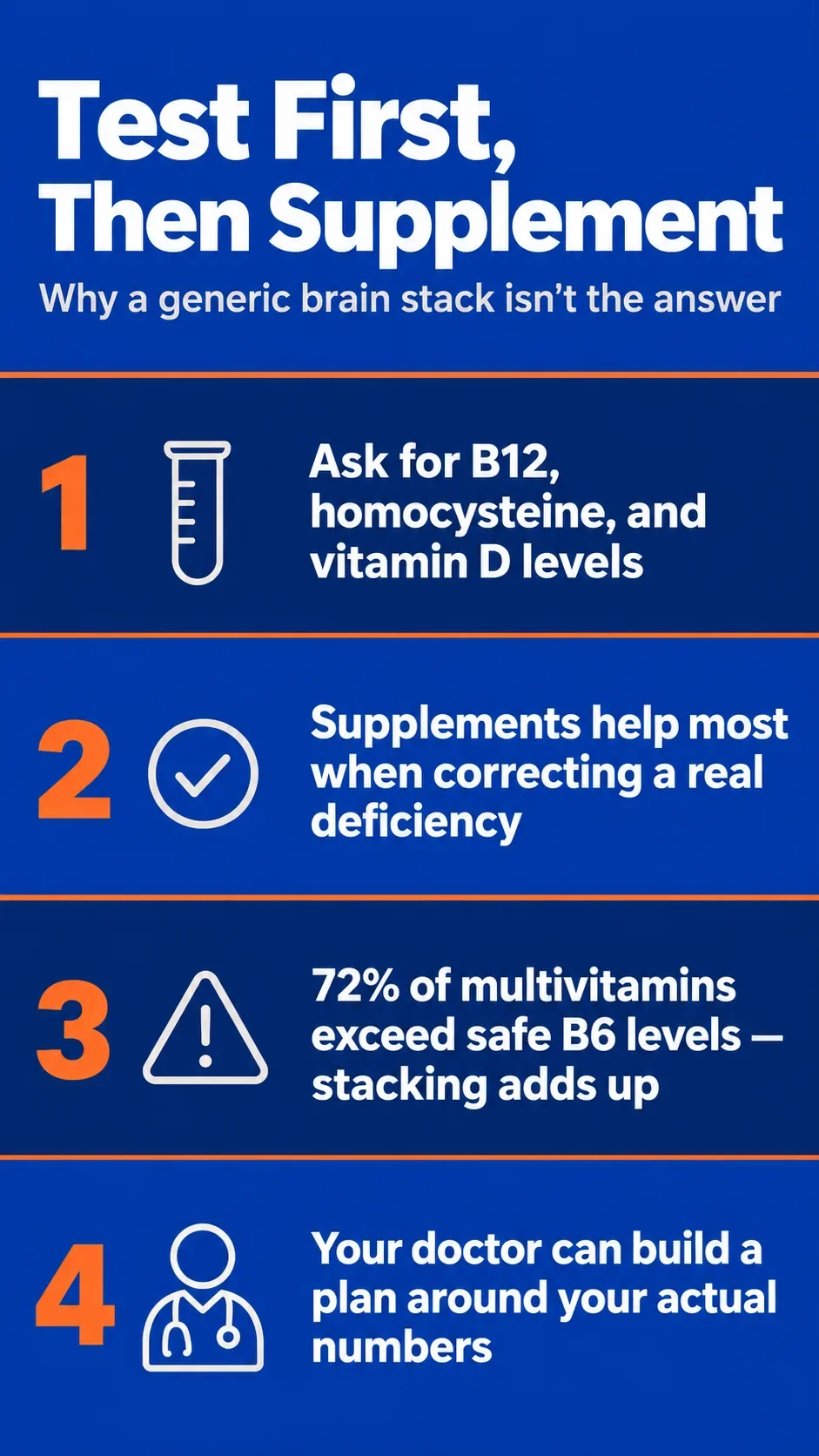
A basic panel to check the nutrients most tied to memory and cognitive function usually includes vitamin B12, homocysteine (a marker that rises when B12 or folate is low), and 25-OH vitamin D. These are simple blood draws your doctor can order at a routine visit. We've walked through why these two nutrients matter for memory specifically in 8 evidence-based ways to protect your memory, so we won't repeat that ground here. The point for this post is narrower: you can't know if you're deficient without checking, and checking is quick and inexpensive compared to months of guessing with a supplement stack.
The Hidden Risk of Guessing: Megadosing Without Testing
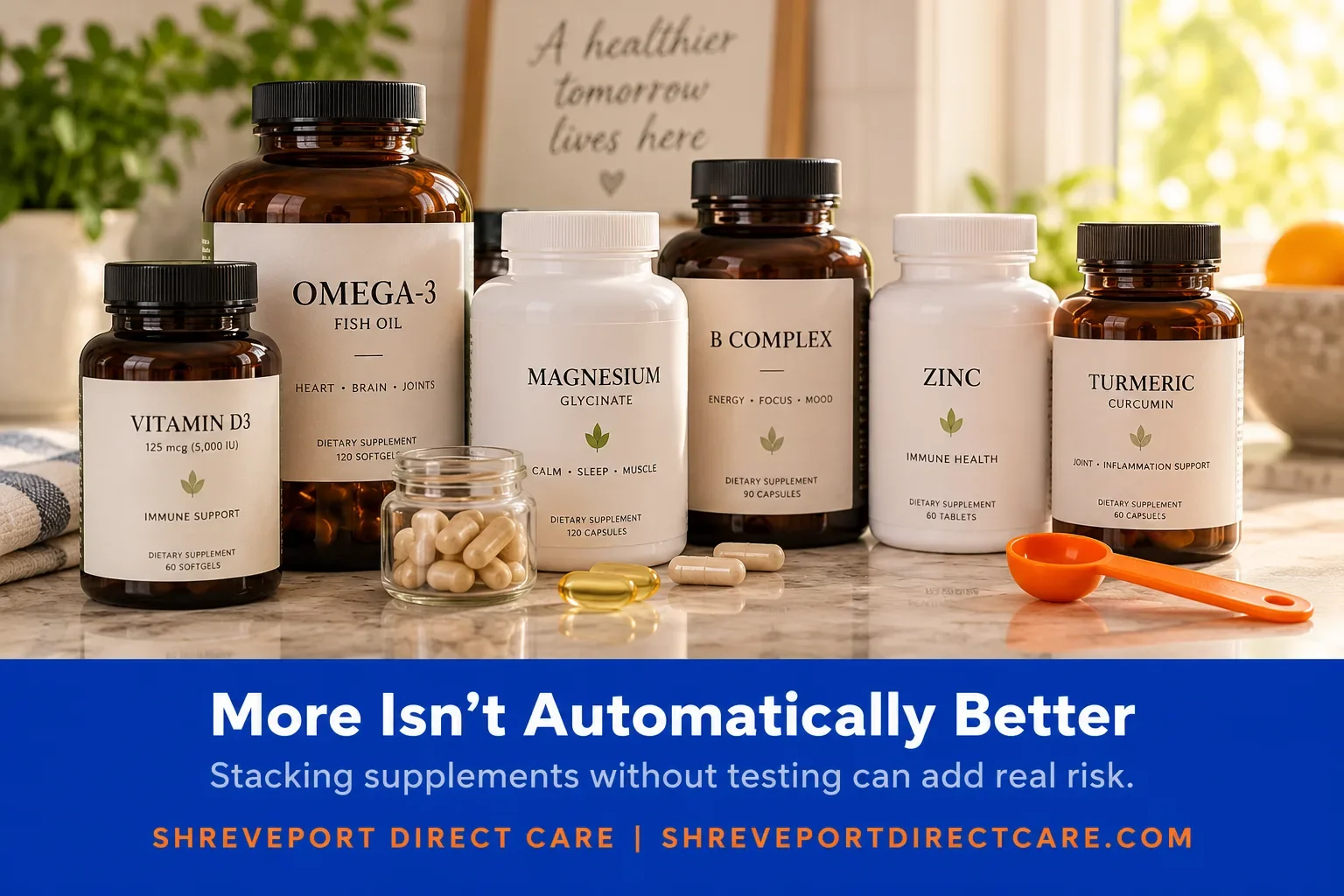
Here's something that doesn't get enough attention. Taking multiple supplements without knowing your levels doesn't just risk wasting money, it can cause real harm. One study of over-the-counter multivitamins found that 72% contained vitamin B6 doses above the recommendations from the National Institutes of Health, and in supplements marketed to adults over 50, that number rose to 96%.[1] The NIH's Office of Dietary Supplements sets the upper safe intake limit for adults at 100 mg per day, but case reports have documented vitamin B6 toxicity, including nerve damage causing numbness and imbalance, in people taking daily multivitamins over time.[2][3]
This is exactly the kind of risk that a one-size-fits-all approach creates. If you're stacking a multivitamin, a "brain health" formula, and an energy supplement, you may be layering B6 (and other nutrients) well past what's safe, without ever intending to. Testing first tells you what you're actually working with, so you can supplement precisely instead of stacking blindly.
What This Looks Like at Shreveport Direct Care
For patients in Shreveport, Bossier City, and across Northwest Louisiana, this is exactly the kind of conversation that gets skipped in a rushed 15-minute visit. As a direct primary care practice, we have the time to order the right labs, review what you're already taking, and build a supplement plan around your actual numbers, not a generic stack. Dr. Bass's [approach to preventive care][0] starts with knowing what's really going on before recommending anything.
If you want the bigger picture on which modifiable factors matter most for memory, [our guide on whether dementia is preventable][1] is a good next read. And if you're already taking a stack of supplements and aren't sure what's actually helping, that's a conversation worth having with your doctor before you buy another bottle.
Schedule a free meet-and-greet with Dr. Bass, no commitment, no pressure. Just a conversation about your health and how we can help.
[Schedule your free visit at Shreveport Direct Care →][2]
Phone/Text: 318-588-7060 Email:[info@shreveportdirectcare.com][3]
FAQs:
1. How do I know if I have a vitamin deficiency? A blood test is the only reliable way. For memory-related concerns, the most useful markers are vitamin B12, homocysteine, and 25-OH vitamin D. Symptoms alone aren't a reliable guide, since deficiency symptoms often overlap with normal aging or other conditions.
2. What blood tests should I ask for before taking brain supplements? Ask your doctor about vitamin B12, homocysteine, and vitamin D levels at minimum. These are the nutrients with the clearest evidence linking deficiency to cognitive symptoms, and correcting a real deficiency is where supplementation shows the most benefit.
3. Can taking too many vitamins be harmful? Yes. Excess vitamin B6, for example, has been linked to nerve damage in case reports involving people taking daily multivitamins over time. More is not automatically better, and stacking multiple supplements can push some nutrients well past safe limits without you realizing it.
4. Is vitamin B6 toxicity a real risk from multivitamins? Yes. One study found 72% of over-the-counter multivitamins contained B6 doses above NIH recommendations, rising to 96% in supplements marketed to adults over 50. The NIH sets the adult upper safe intake limit at 100 mg per day.
5. Should everyone take the same brain health supplement stack? No. Nutrient needs depend on your diet, medications, age, and health history. A supplement that helps someone with a real deficiency won't do anything extra for someone who's already sufficient, and it may add unnecessary risk.
6. Can a primary care doctor test me for nutrient deficiencies linked to memory? Yes. A routine primary care visit can include blood work checking B12, homocysteine, and vitamin D, giving you a factual basis for deciding what, if anything, is worth supplementing.
References
- Neurology. Vitamin B6 (pyridoxine) Toxicity and OTC Supplements.
- National Institutes of Health, Office of Dietary Supplements. Vitamin B6 — Consumer.
- PMC. Vitamin B6 Toxicity Secondary to Daily Multivitamin Use: A Case Report.
Shreveport Direct Care is a direct primary care practice serving adults and children in Shreveport, Bossier City, and surrounding communities in Northwest Louisiana. Dr. Pat "Ricky" Bass III is board-certified in Internal Medicine and Pediatrics.
Schedule a free meet-and-greet with Dr. Bass, no commitment, no pressure. Just a conversation about your health and how we can help.
Schedule your free visit at Shreveport Direct Care →
Phone/Text: 318-588-7060 Email: info@shreveportdirectcare.com
FAQs:
1. How do I know if I have a vitamin deficiency? A blood test is the only reliable way. For memory-related concerns, the most useful markers are vitamin B12, homocysteine, and 25-OH vitamin D. Symptoms alone aren't a reliable guide, since deficiency symptoms often overlap with normal aging or other conditions.
2. What blood tests should I ask for before taking brain supplements? Ask your doctor about vitamin B12, homocysteine, and vitamin D levels at minimum. These are the nutrients with the clearest evidence linking deficiency to cognitive symptoms, and correcting a real deficiency is where supplementation shows the most benefit.
3. Can taking too many vitamins be harmful? Yes. Excess vitamin B6, for example, has been linked to nerve damage in case reports involving people taking daily multivitamins over time. More is not automatically better, and stacking multiple supplements can push some nutrients well past safe limits without you realizing it.
4. Is vitamin B6 toxicity a real risk from multivitamins? Yes. One study found 72% of over-the-counter multivitamins contained B6 doses above NIH recommendations, rising to 96% in supplements marketed to adults over 50. The NIH sets the adult upper safe intake limit at 100 mg per day.
5. Should everyone take the same brain health supplement stack? No. Nutrient needs depend on your diet, medications, age, and health history. A supplement that helps someone with a real deficiency won't do anything extra for someone who's already sufficient, and it may add unnecessary risk.
6. Can a primary care doctor test me for nutrient deficiencies linked to memory? Yes. A routine primary care visit can include blood work checking B12, homocysteine, and vitamin D, giving you a factual basis for deciding what, if anything, is worth supplementing.
References
Neurology. Vitamin B6 (pyridoxine) Toxicity and OTC Supplements.
National Institutes of Health, Office of Dietary Supplements. Vitamin B6 — Consumer.
PMC. Vitamin B6 Toxicity Secondary to Daily Multivitamin Use: A Case Report.
Shreveport Direct Care is a direct primary care practice serving adults and children in Shreveport, Bossier City, and surrounding communities in Northwest Louisiana. Dr. Pat "Ricky" Bass III is board-certified in Internal Medicine and Pediatrics.